
Mississippi Gulf Coast Pattern: Lighthouses, Casinos, and 26 Miles of Beach Towns
The Mississippi Gulf Coast runs from Bay St. Louis to Pascagoula, and in those 62 miles you get: historic homes that have weathered multiple hurricanes, casinos lit up like permanent celebrations, chainsaw sculptures carved from storm-damaged trees that became public art, and enough fried seafood to justify the drive from anywhere.
It's a coastline that's been rebuilt more than once and came back both resilient and determined to have a good time.
I visit at least once a year, and every time I think "this entire stretch needs to be a pattern."
So I made it one.
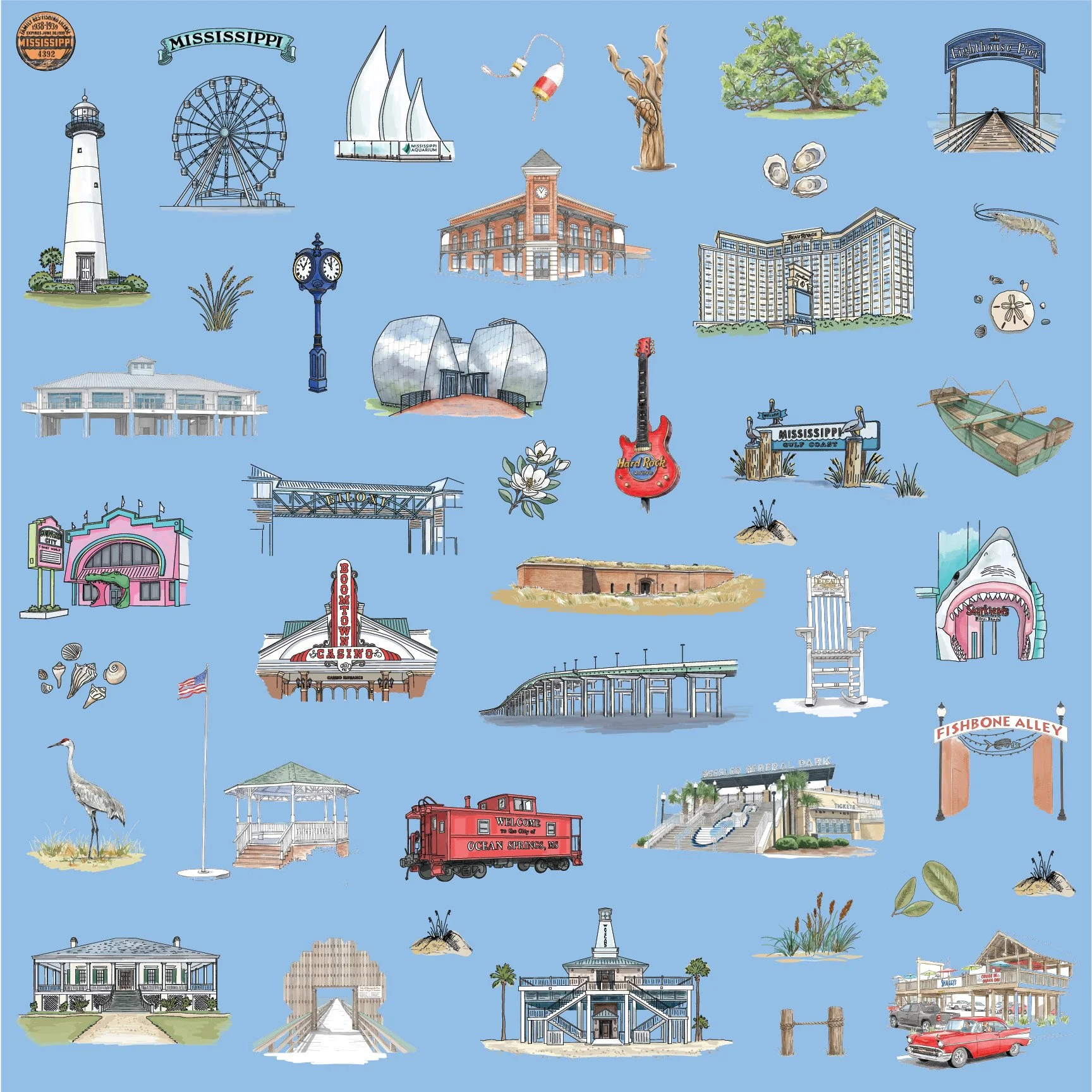
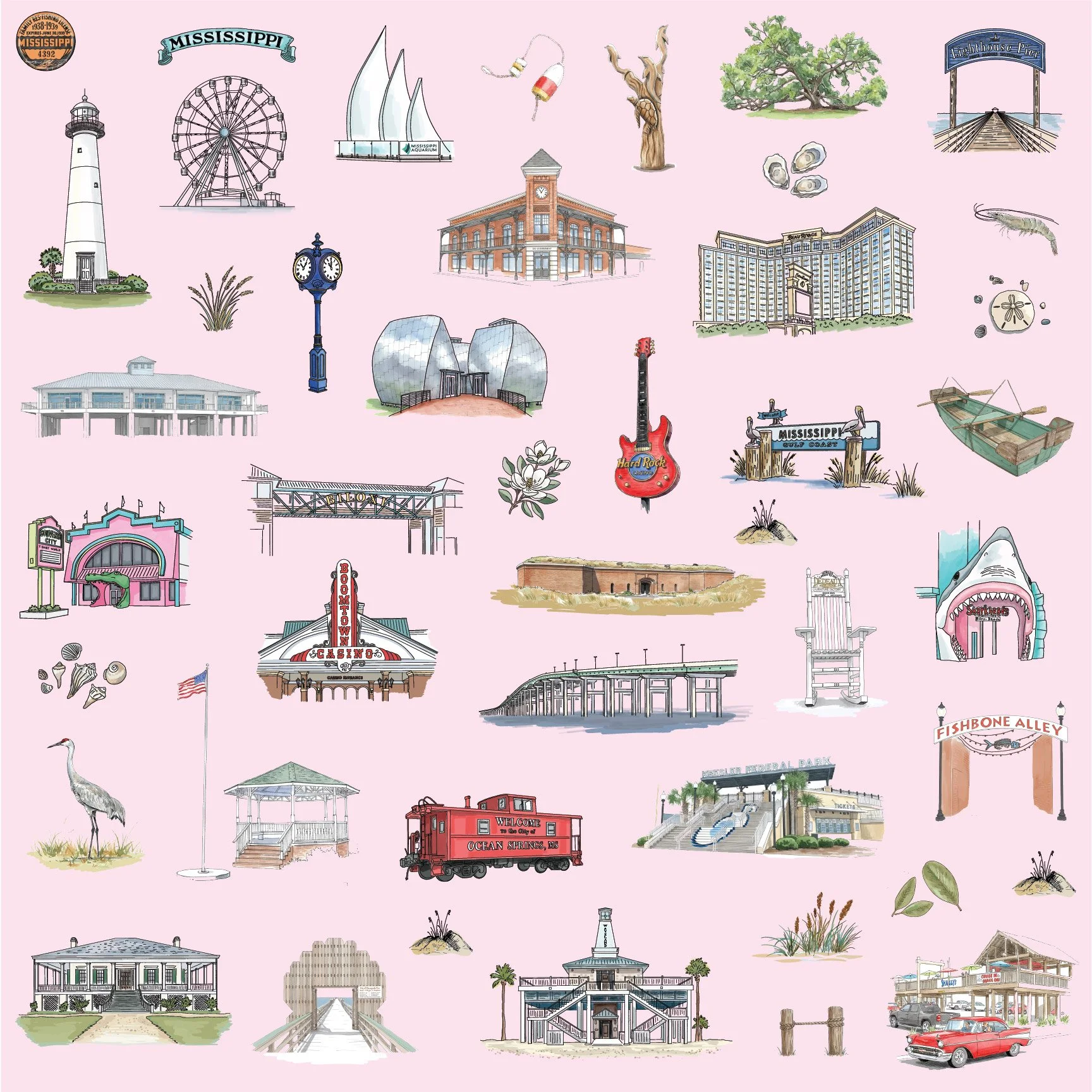
What's Actually In Here
The Biloxi Lighthouse (still standing, still iconic). The Beau Rivage casino tower (tallest thing for miles). Hard Rock's giant guitar (you can see it from the highway). Paradise Pier Fun Park's Ferris wheel. The Ocean Springs bridge. Ship Island Fort (accessible only by boat, naturally).
Also: Beauvoir (Jefferson Davis's last home, now a museum), the Bay St. Louis clock tower, those chainsaw tree sculptures carved from oaks lost to Katrina that have become symbols of resilience, the Biloxi Visitors Center, the Hard Rock's giant guitar sign, fishing piers, beach pavilions, the World's Largest Rocking Chair (or at least it was when it was built in 1995), magnolia blossoms, blue heron, a vintage red car (Cruisin' the Coast brings thousands of them every October), the old red caboose, and the Sharkheads souvenir shop sign.
Why This Works as a Pattern
The Gulf Coast doesn't have one defining landmark—it has 62 miles of them spread across six towns that all have their own personalities but share the same beach.
Bay St. Louis and Waveland lean historic and artsy. Pass Christian has the old-money beach houses. Gulfport has the port and the casinos. Biloxi has everything—lighthouses, casinos, seafood restaurants, maritime history, and that Hard Rock guitar. Ocean Springs is the arts district with galleries and boutiques.
You can't capture that in one illustration. But you can capture it in a pattern where the Beau Rivage and a chainsaw sculpture and a historic cottage all share space without competing.
A Slightly Different Approach
I usually work in clean vector illustration, but the Gulf Coast needed something softer. More humid. More sun-faded.
So I used watercolor brushes and pencil textures to get that washed-out, salt-air feeling. The result looks like it's been sitting in coastal sunlight for a few decades—which feels right for a place that's been rebuilding itself since at least 2005.
Each element was drawn individually, then arranged like a vintage travel poster that's optimistic about the future but respectful of the past.
What You Can Do With It
This works for anything that needs Gulf Coast personality without generic beach vibes. Hospitality projects, coastal gift shops, tourism marketing, packaging, textiles, anything aimed at people who either live on the Gulf Coast or make the pilgrimage for the seafood.
The full pattern works for wallpaper, fabric, large-scale graphics. Individual elements work standalone. The whole thing scales without losing the watercolor texture.
It's designed for products and spaces that want Mississippi Gulf Coast energy—resilient, welcoming, unpretentious, and genuinely happy you're here.
Part of a Bigger Thing
I'm working through a series of place-based patterns for destinations with strong visual identities. The Mississippi Gulf Coast just happens to be one I visit every year and finally got around to illustrating properly.
Still in production. More patterns coming soon.