
Surface Pattern Design as Storytelling, Not Decoration
Surface pattern design is often treated as something purely decorative — a repeat applied to a product, a background, or a surface to make it more visually interesting.
But at its best, surface pattern design is a system for storytelling.
Patterns can communicate place, culture, rhythm, and identity. They can reinforce brand voice, create emotional connection, and transform everyday objects into something memorable. That’s the approach I take in my own pattern work — designing patterns that are rooted in narrative, context, and intention, not trend cycles.
Over the years, I’ve turned my illustrations into pattern collections that now live on everything from wallpaper, wrapping paper to throw pillows to zip-top pouches — thanks to print-on-demand platforms like Spoonflower, Contrado, Zazzle, Printify, and Printful.


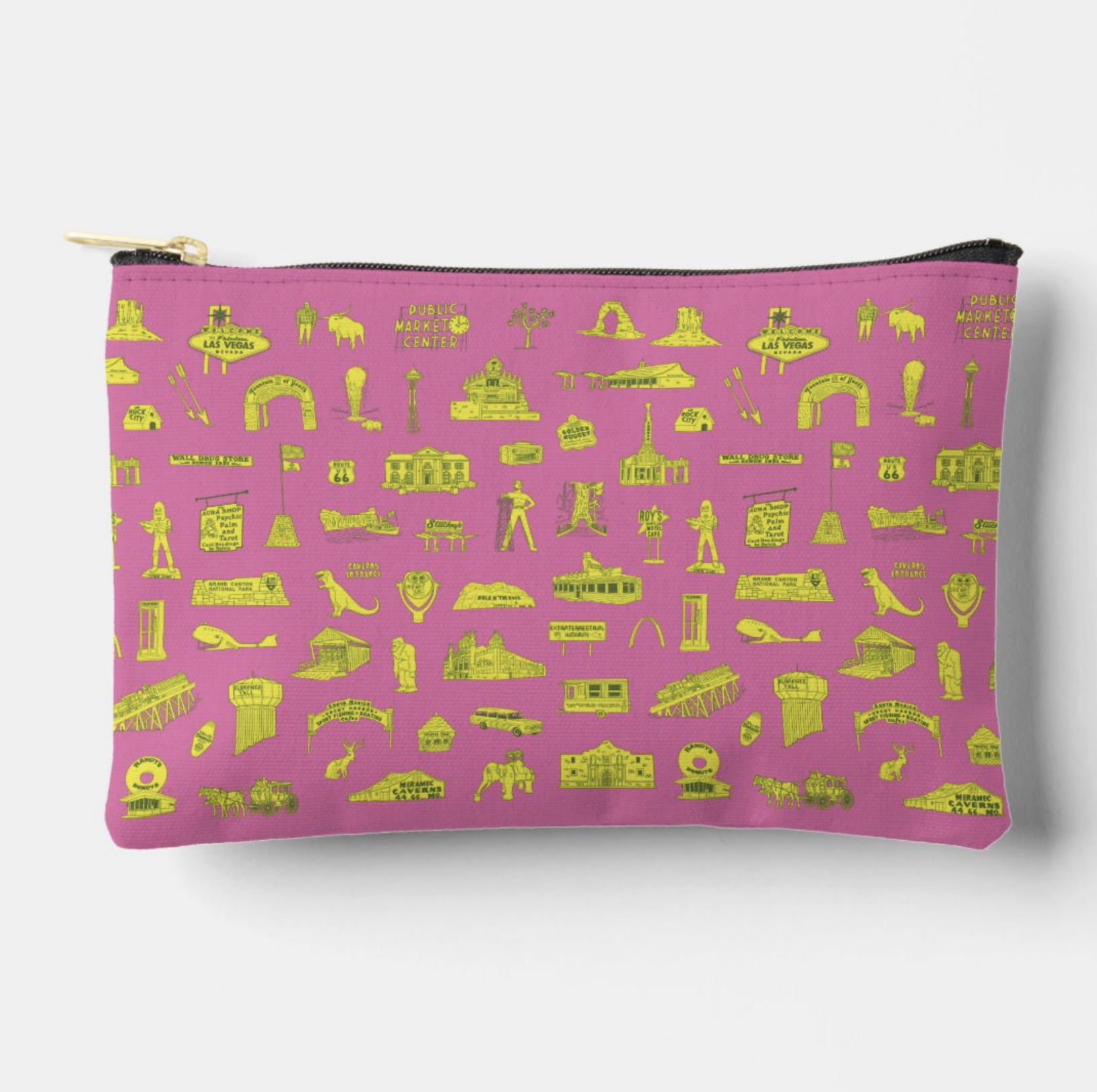
Retro Road Trip Cosmetic Bag available @ Zazzle
Bubble & Lime Colorway
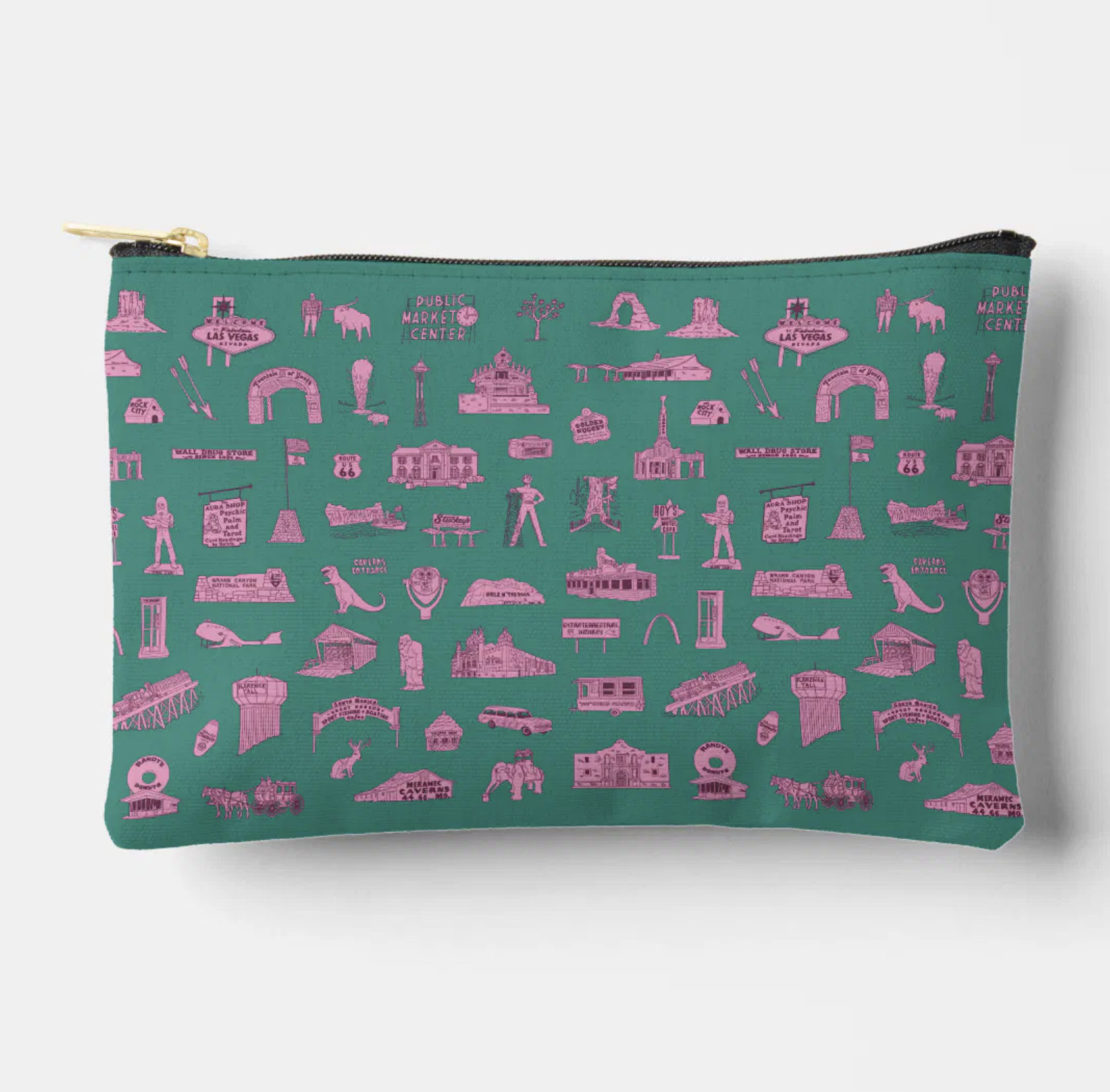
Retro Road Trip Cosmetic Bag available @ Zazzle
Pink Flamingo Colorway
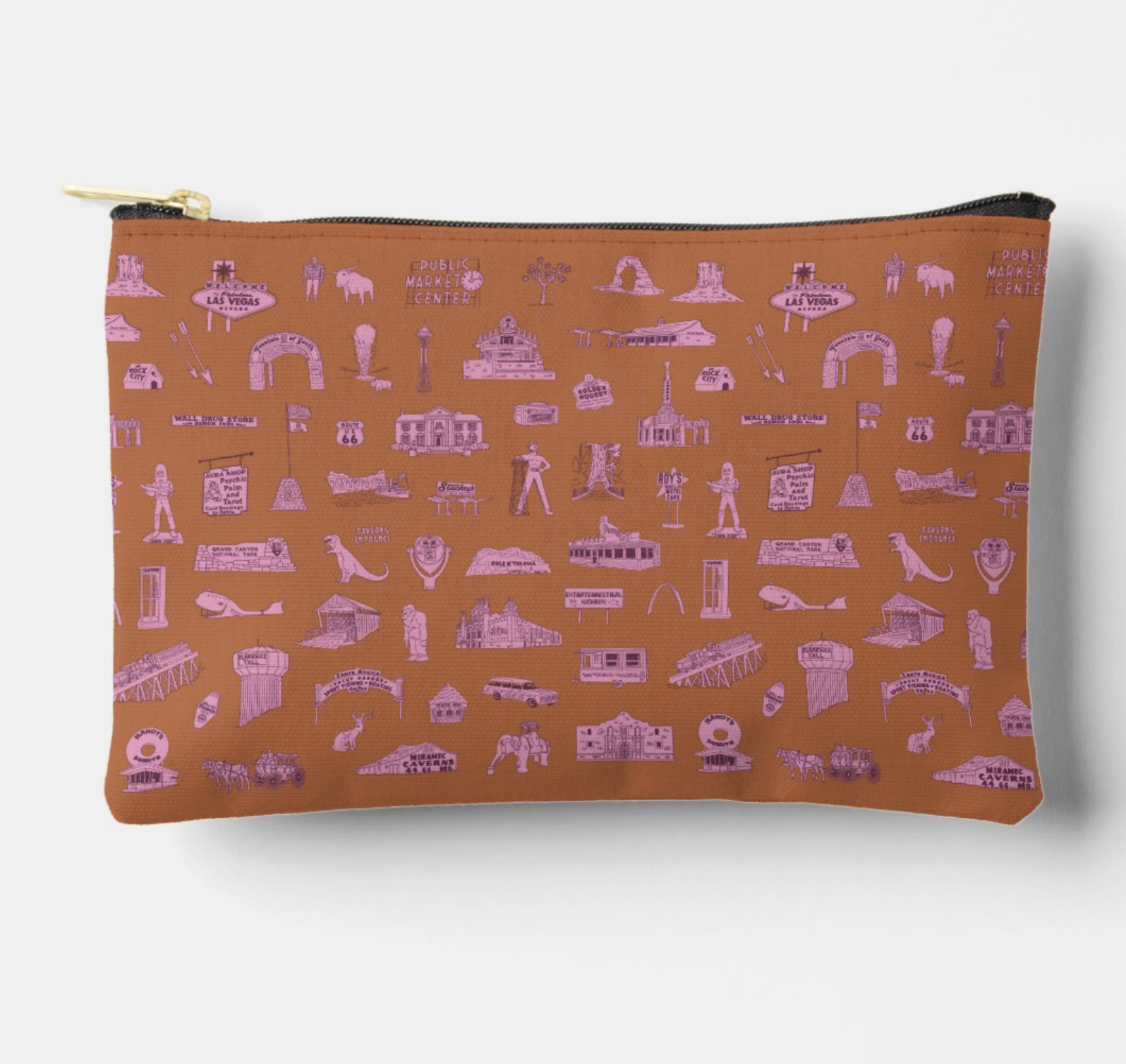
Retro Road Trip Cosmetic Bag available @ Zazzle
Desert Bloom Colorway
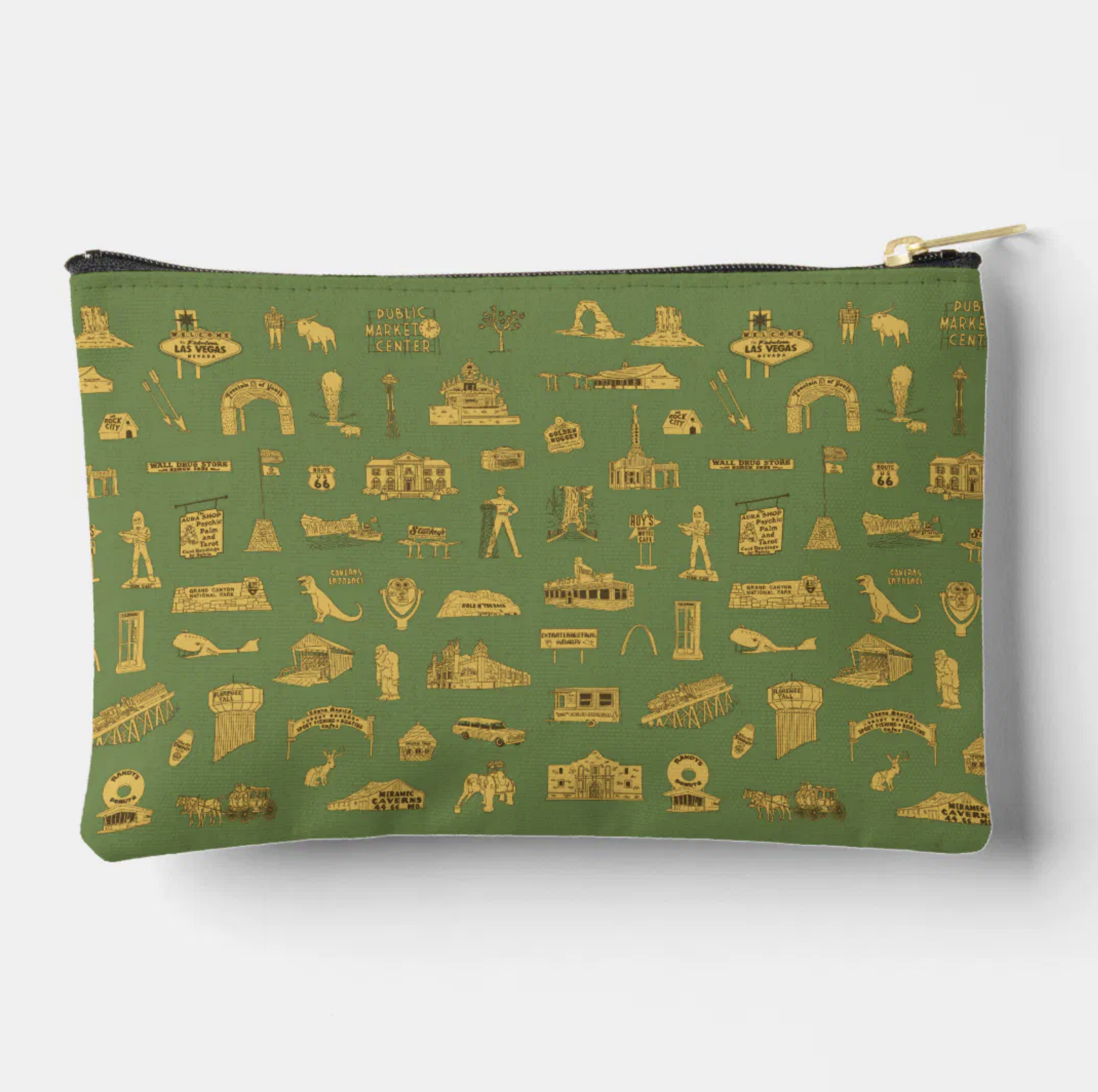
Retro Road Trip Cosmetic Bag available @ Zazzle
Avocado Sunset Colorway
What Surface Pattern Design Really Is
Surface pattern design is the creation of repeating or modular visual systems that can be applied across physical and digital surfaces — from textiles and packaging to stationery, signage, and environmental graphics.
But beyond the technical definition, strong pattern design:
Establishes visual consistency across applications
Supports brand recognition and emotional tone
Creates continuity across products or environments
Extends illustration systems into scalable assets
Patterns aren’t standalone artwork — they’re frameworks.
Designing Patterns with Place in Mind
Much of my pattern work is place-based — inspired by cities, regions, folklore, architecture, and local character.
Instead of abstract motifs for abstraction’s sake, I focus on:
Regional landmarks and iconography
Cultural references and visual cues
Environmental details that feel specific, not generic
Repeats that balance rhythm with restraint
This approach allows patterns to function as subtle storytelling tools — whether they’re used on a guest welcome card, a fabric collection, or a branded product.
A Savannah pattern shouldn’t feel interchangeable with a Gulf Coast pattern. Place matters.
From Illustration to Pattern System
Every surface pattern begins as illustration — but not every illustration makes a good pattern.
When developing a pattern system, I’m thinking about:
Motif hierarchy — which elements lead, which support
Scale and repeat logic — how the pattern behaves across sizes
Negative space and pacing — where the eye rests
Flexibility — how the pattern adapts to different uses
This ensures the pattern works just as well in a small detail as it does across a large surface.
Where Surface Patterns Are Most Effective
Surface pattern design is especially impactful when used intentionally, not everywhere at once. Some of the most effective applications include:
Hospitality and destination branding
Guest materials and welcome collateral
Licensing and product design
Packaging and retail experiences
Editorial and environmental graphics
Patterns become most powerful when they’re part of a larger visual system, not a one-off decorative layer.
Pattern Design, Licensing, and Longevity
Many of my surface patterns are developed with licensing in mind — meaning they’re designed to be adaptable, extensible, and long-lasting.
This includes thinking about:
Colorway flexibility
Motif reuse across collections
Market-specific adaptations
Longevity beyond a single campaign or season
A well-designed pattern should hold up over time and across contexts — not expire with the trend that inspired it.
Why I Treat Patterns as Systems
Surface pattern design sits at the intersection of illustration, branding, and systems thinking. When done well, it supports storytelling at scale.
That’s why I approach pattern work the same way I approach maps, guest experiences, and brand systems — with clarity, structure, and intention.
Patterns aren’t filler. They’re infrastructure. Whether used for hospitality, product licensing, or brand storytelling, surface pattern design has the power to create connection through repetition — not monotony.