
A User Experience (UX) Audit Is a Decision-Making Tool That Creates Clarity Before Any Website Redesign
Most teams don’t need more opinions about their website. They need clarity.
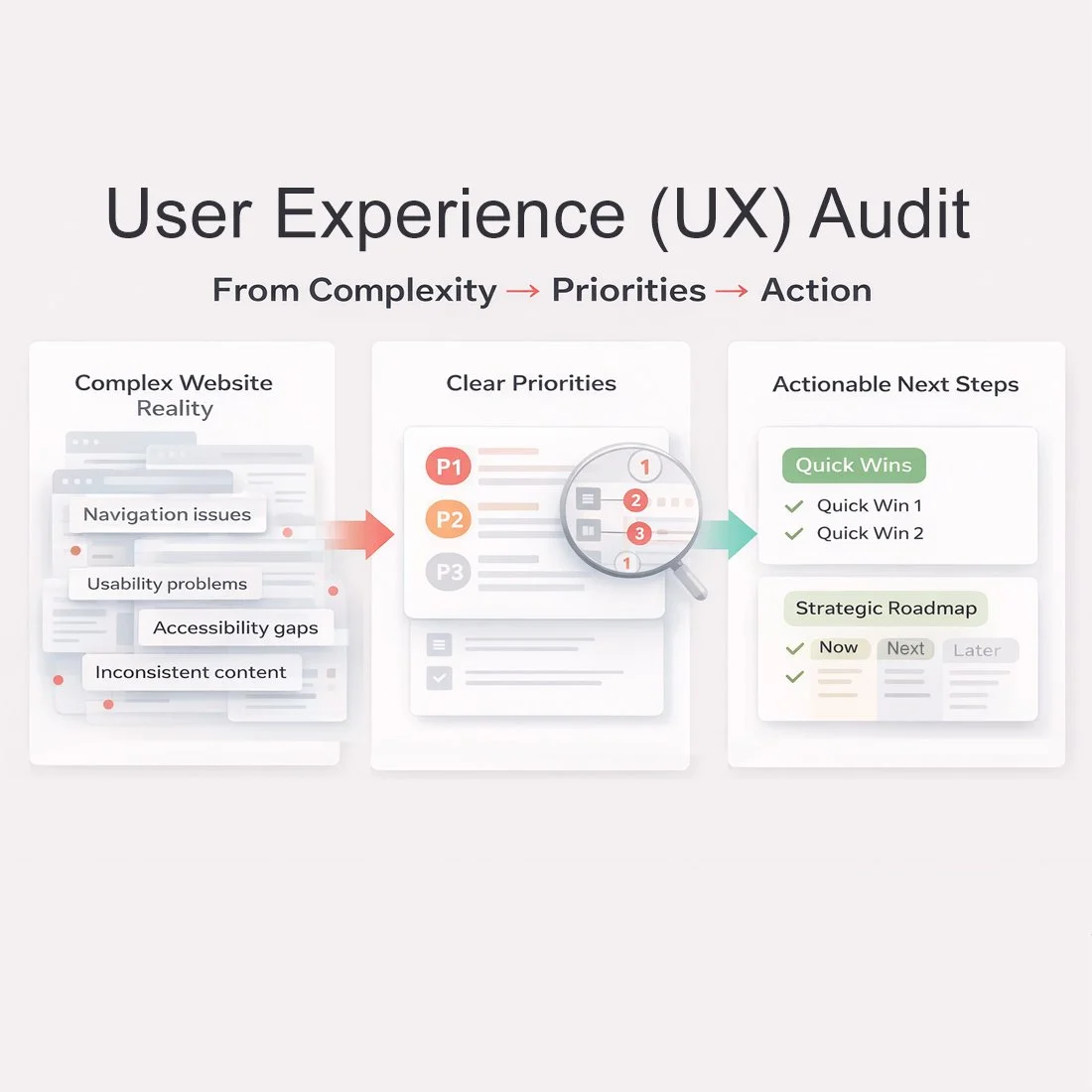
A UX audit isn’t a redesign roadmap, a teardown, or a pile of screenshots with red circles. When done well, it’s a strategic tool—one that helps teams understand what’s broken, what matters most, and what can wait without putting the entire organization into panic mode.
This post walks through how I approach UX audits, what’s actually included, and how the work translates into action—not just feedback.
The Goal of a UX Audit
The primary goal of my UX audits is simple: identify where users are getting stuck and why—across the flows that matter most.
That usually includes things like:
• Conversion pathways
• Finding critical information
• Mobile usability and accessibility
• Content clarity and wayfinding
• Structural or governance issues that allow problems to compound over time
An audit is not about visual taste. It’s about task completion, risk reduction, and prioritization—especially for organizations that can’t afford to redesign everything at once.
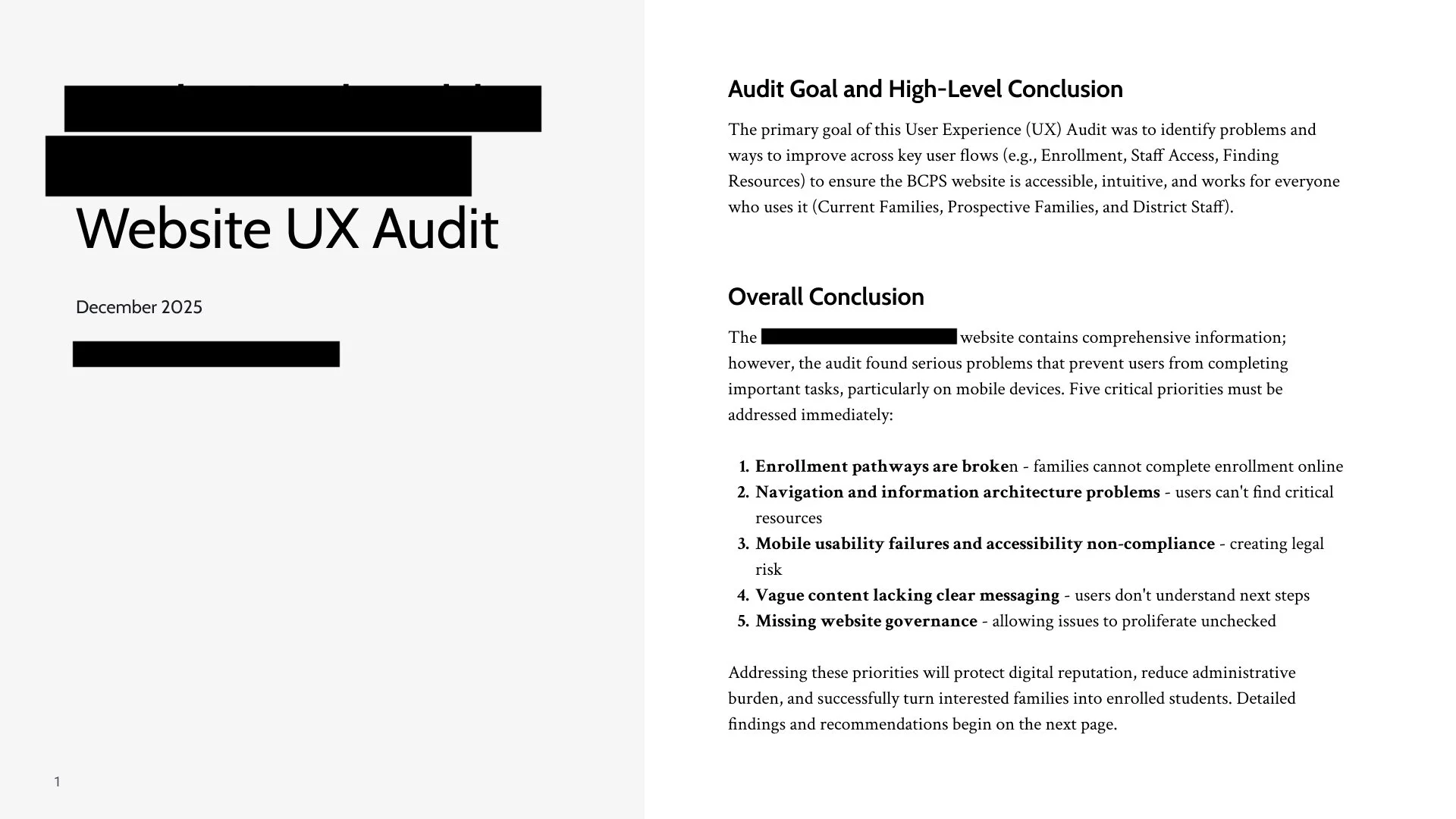
Every audit begins with a clear, plain-spoken executive summary—not buried findings. Screenshots shown here include light redactions to maintain client confidentiality while illustrating the audit structure.
If you’re not sure where your site is losing people, I put together a structured UX audit that pinpoints exactly what’s not working and what to fix first.
Global First, Then Granular
One of the biggest mistakes teams make when reviewing UX issues is starting too small.
I always begin with global patterns—the issues that appear repeatedly across templates, sections, or user types. These are the problems that quietly create friction everywhere and have the highest return when fixed.
This includes:
• Navigation structure and information architecture
• Repeated content gaps or vague messaging
• Accessibility failures that affect entire page types
• Inconsistent templates or UI patterns
If the same issue shows up on five pages, it’s not a page problem. It’s a system problem.
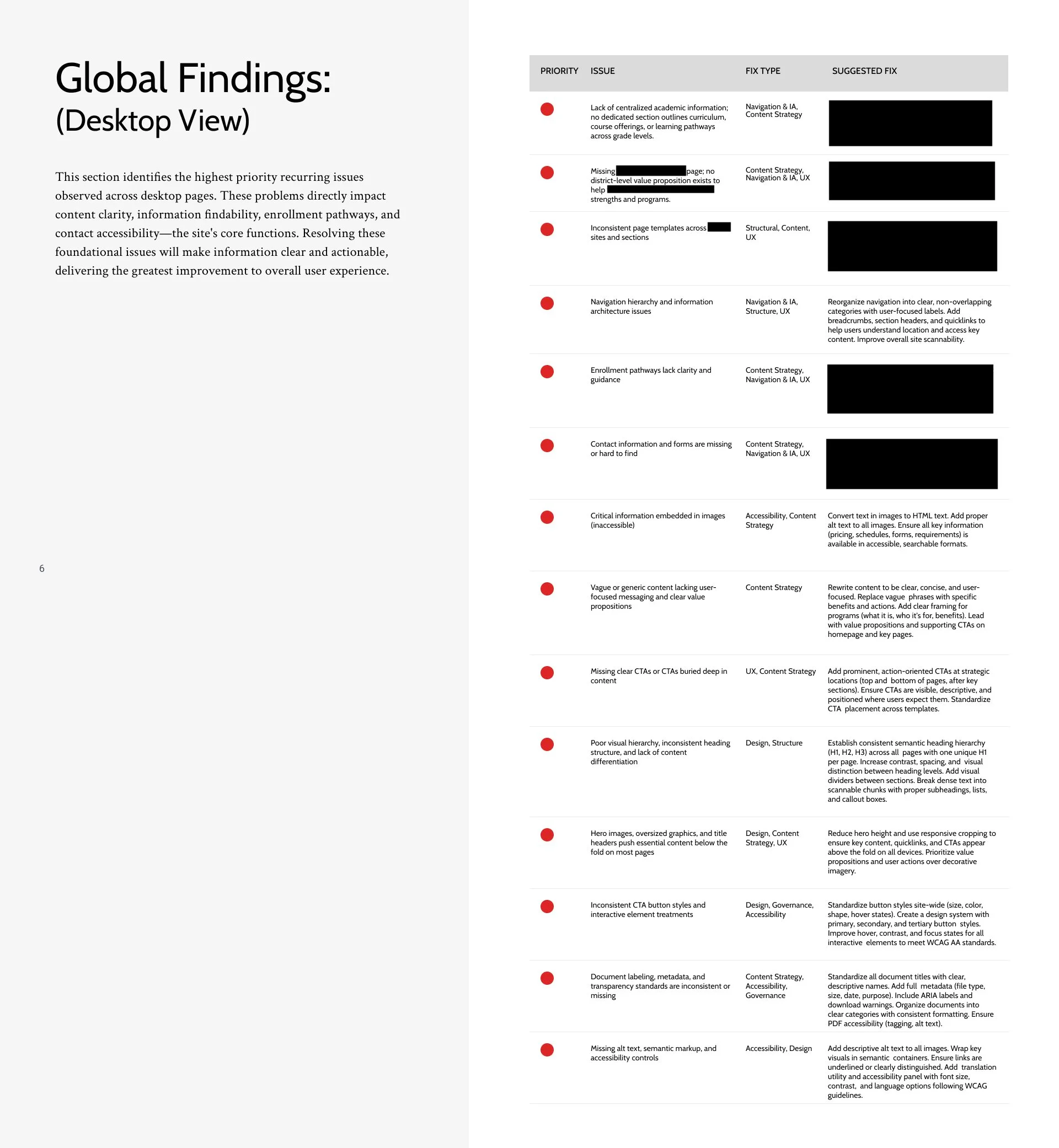
Global findings surface recurring issues that impact the entire site—not just individual pages. Screenshots shown here include light redactions to maintain client confidentiality while illustrating the audit structure.
These are exactly the kind of issues I flag in UX audits— not just what’s wrong, but how it’s affecting user behavior and conversions.
Not Everything Is a Fire
A good UX audit doesn’t treat every issue as urgent. Severity matters. Priority matters. And context matters.
Issues are ranked based on:
• Whether users can complete critical tasks
• The business or operational impact of failure
• Accessibility and compliance risk
• Frequency and visibility of the issue
This prevents teams from wasting time polishing low-impact details while critical pathways remain broken.
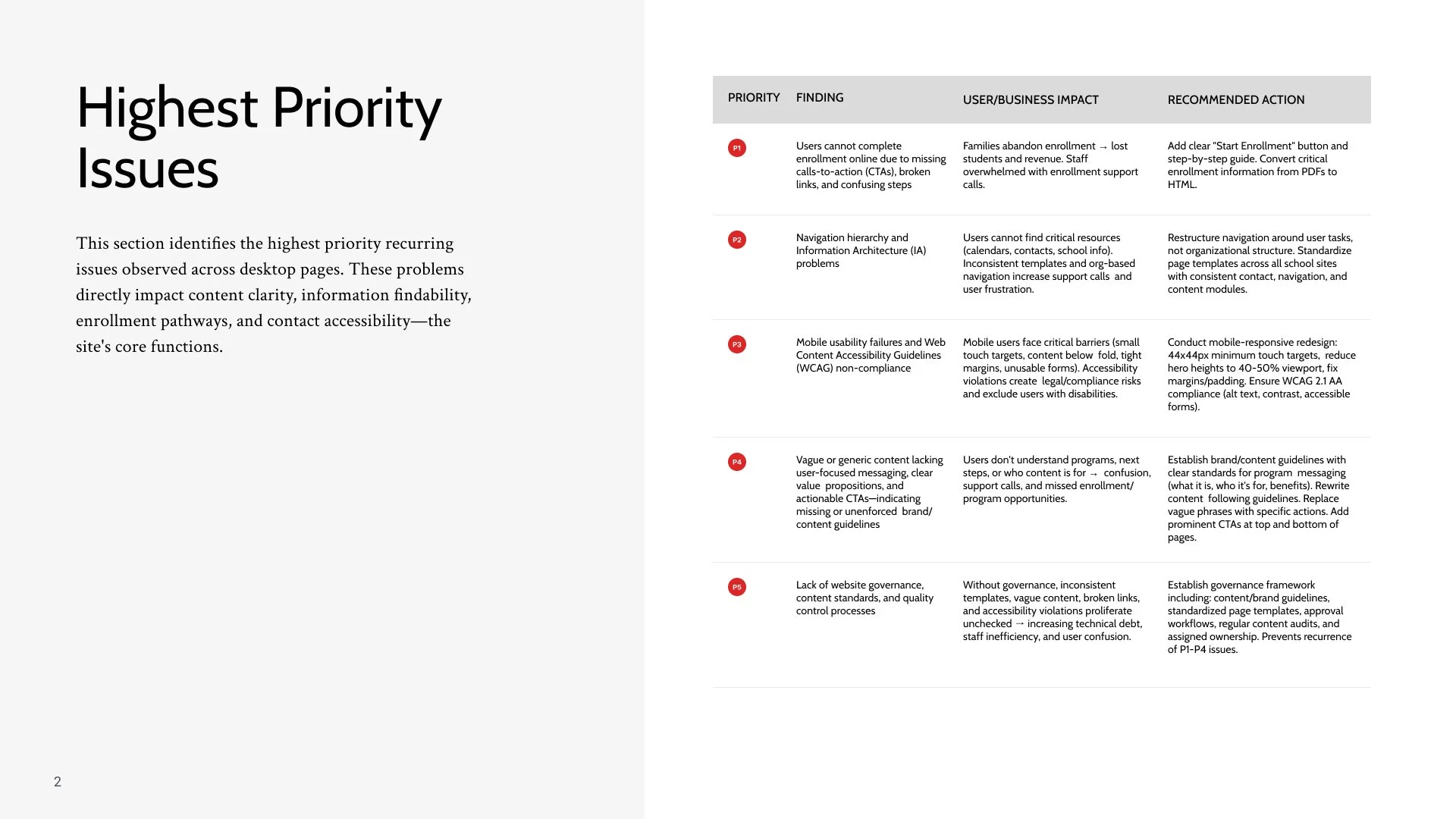
Priorities are tied to task failure and risk—not aesthetics. Screenshots shown here include light redactions to maintain client confidentiality while illustrating the audit structure.
If you’re seeing any of this on your own site, a UX audit is the fastest way to get clarity without guessing.
Immediate Actions vs. Strategic Work
Some problems can—and should—be fixed quickly. Others require coordination, planning, or governance to address properly.
That’s why audits include both:
• Immediate actions and quick wins (low effort, high impact)
• Strategic initiatives that require sequencing and ownership
Quick wins build momentum. Strategic work prevents recurrence. Both matter.
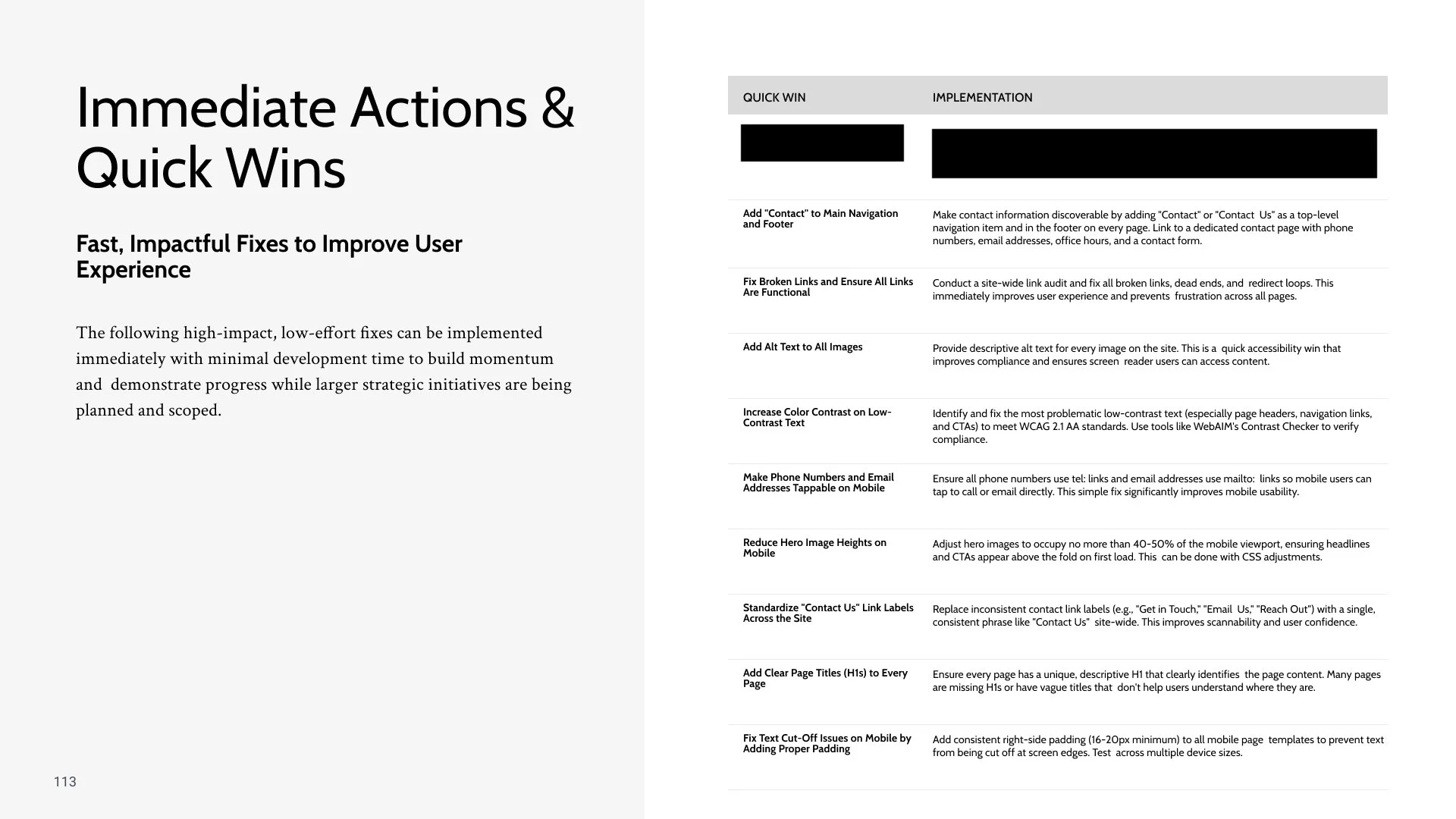
Fast, impactful fixes help teams build momentum while larger initiatives are scoped. Screenshots shown here include light redactions to maintain client confidentiality while illustrating the audit structure.
Not sure what’s working on your site? A UX audit gives you a clear breakdown of what’s helping, what’s hurting, and what to fix first — without starting over.
Turning Findings Into a Roadmap (Without Forcing a Redesign)
UX audits are often mistaken for redesign mandates. They’re not. Instead, the findings roll up into strategic opportunities—clear themes that help organizations move toward greater digital maturity over time.
This might include:
Clarifying core value propositions
Establishing content and brand standards
Improving governance and ownership
Creating scalable templates and patterns
The goal is forward motion—not disruption for disruption’s sake.
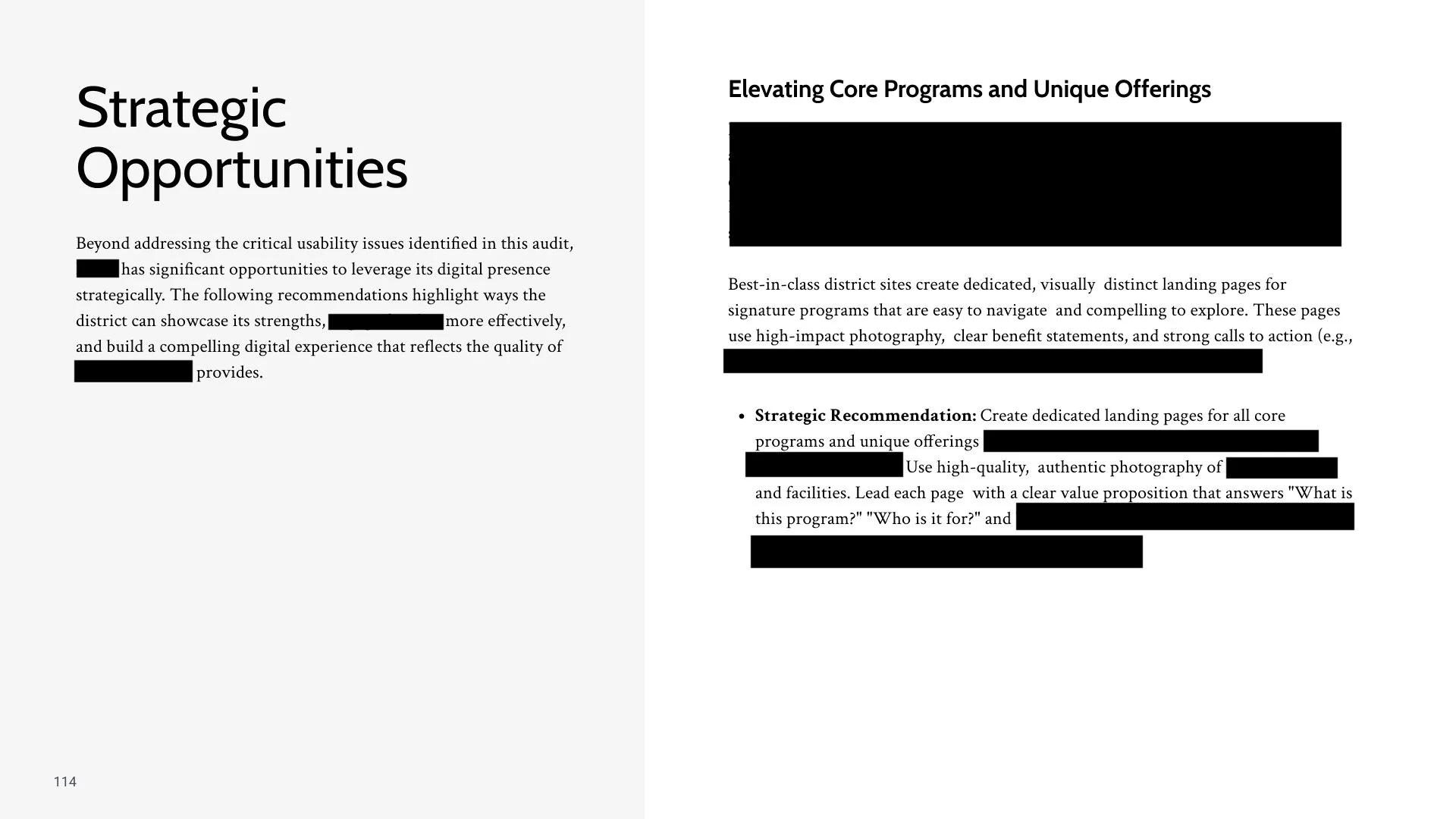
Strategic recommendations create direction without forcing premature redesigns. Screenshots shown here include light redactions to maintain client confidentiality while illustrating the audit structure.
How the Audit Is Meant to Be Used
Audit reports aren’t meant to be read linearly by one person. They’re designed for multiple audiences:
Leadership scanning for risk and direction
Designers and developers implementing fixes
Content teams clarifying messaging
Stakeholders aligning on priorities
That’s why findings are structured, color-coded by severity, and grouped by theme—not dumped into a single list.
I’ve been doing this work long enough to see the same problems surface again and again—often in organizations with smart teams and good intentions. Over time, that repetition shapes how I audit: what I look for first, what I flag as urgent, and what I intentionally leave alone. The structure of these audits isn’t theoretical; it’s the result of years of seeing what actually helps teams move forward.
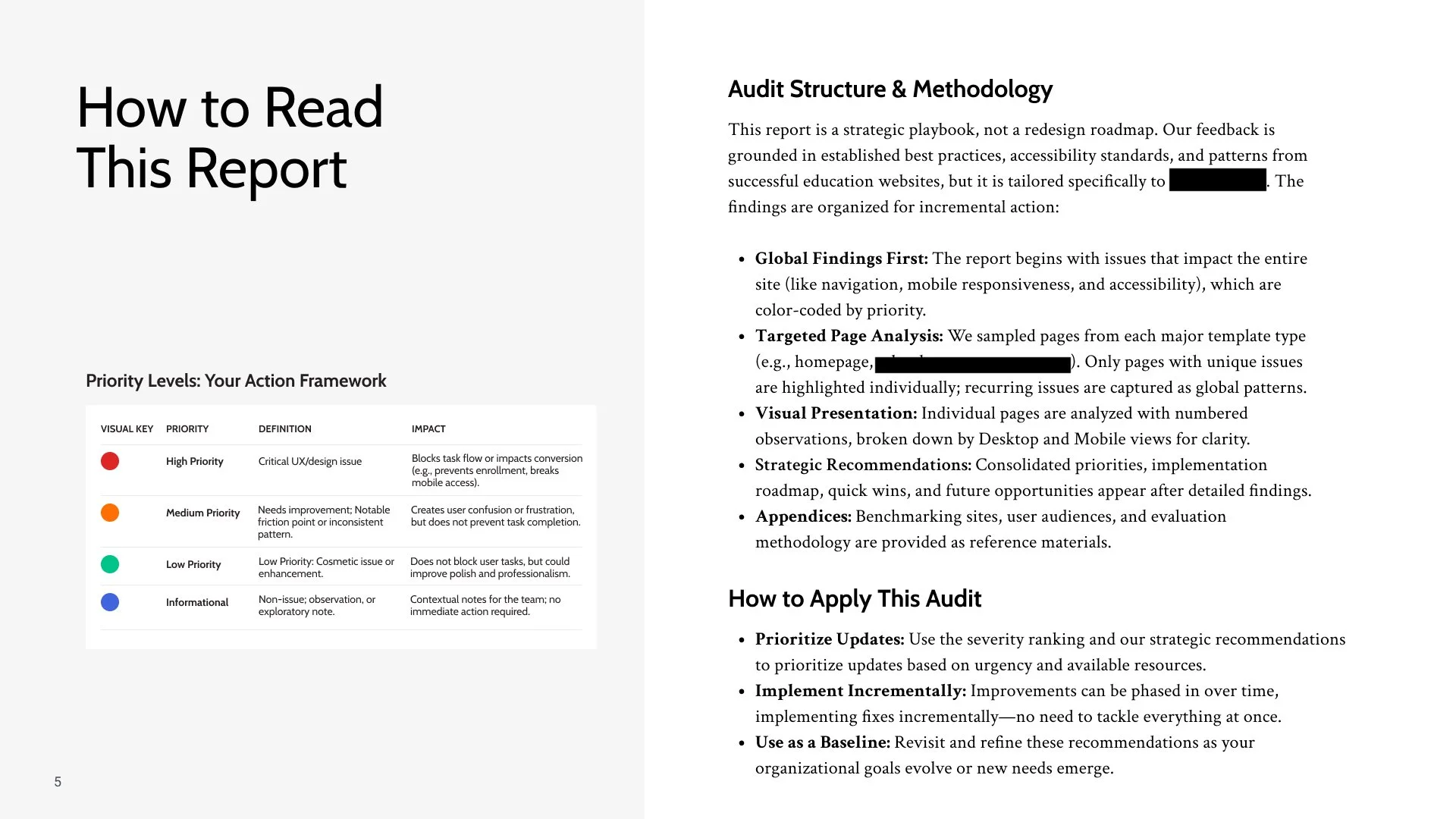
The audit is structured so different teams can quickly find what matters to them. Screenshots shown here include light redactions to maintain client confidentiality while illustrating the audit structure.
Why UX Audits Come in Tiers
Not every organization needs the same level of depth. Some teams need quick clarity. Others need comprehensive system-level insight.
Offering UX audits in defined tiers allows the work to match the questions being asked—without over-scoping or under-serving the problem.
Each tier exists to support a different stage of decision-making, from early diagnosis to long-term planning.
What a Good UX Audit Ultimately Does
A good UX audit doesn’t overwhelm teams. It gives them permission to focus.
It replaces guesswork with shared understanding. It helps teams say “not yet” to the wrong fixes. And it creates momentum without panic. Most importantly, it turns a vague sense that “something’s off” into a clear path forward.