
St. Augustine Landmarks
A place-based illustration system built from the architectural and cultural landmarks of St. Augustine, Florida.
St. Augustine Landmarks organizes the city’s historic architecture and coastal heritage into a cohesive illustration system with pattern potential. Rather than a single motif, this collection synthesizes recognizable landmarks and local details into structured visuals designed for repeat development and multi-product applications.
The Story
St. Augustine, the oldest continuously occupied European settlement in the continental United States, is layered with architectural richness and coastal charm. Its cobblestone streets, historic forts, ornate Spanish Colonial buildings, vintage signage, and Atlantic shoreline offer a vivid visual language.
This collection draws from those elements — not as a literal catalog, but as a designed pattern system. Each illustration was crafted to stand alone or integrate rhythmically within larger layouts. The repeat structure is currently in refinement, with future iterations planned for multiple scale variations and coordinated pattern extensions.
The result is a design that feels rooted in place while remaining adaptable for products, interiors, and branded environments.
What's Inside
Historic Architecture — Castillo de San Marcos, Lightner Museum façade, Ponce de León Hotel details, Bridge of Lions balustrades
Local Markers — Spanish Revival ornamentation, wrought-iron accents, old signage, tropical foliage
Coastal Elements — Ocean waves, sandy textures, pelicans and seagulls, beachfront cues
Illustrations capture architectural precision and everyday coastal nuance with warm, deliberate linework and a sense of place.
Colorways
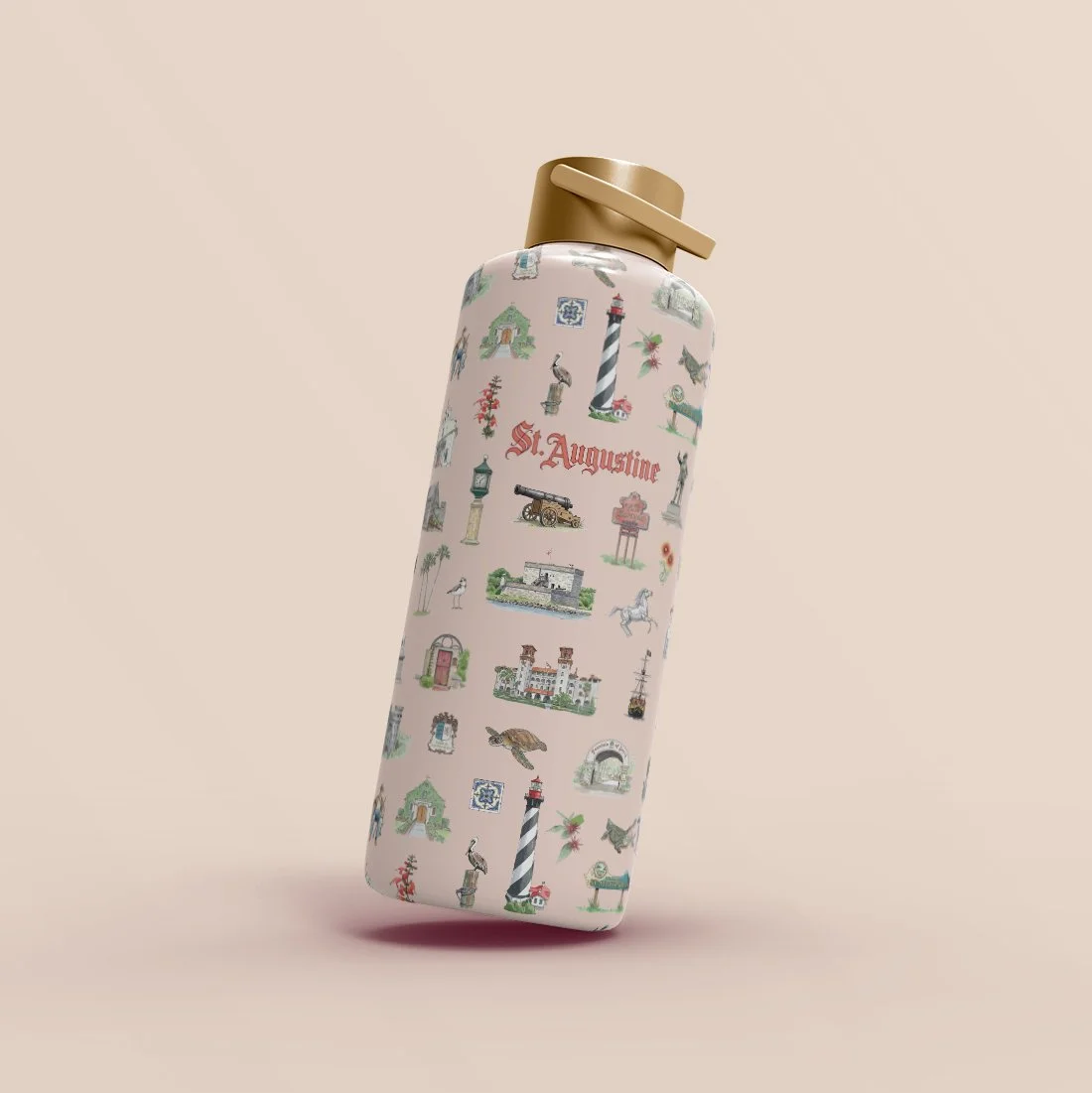
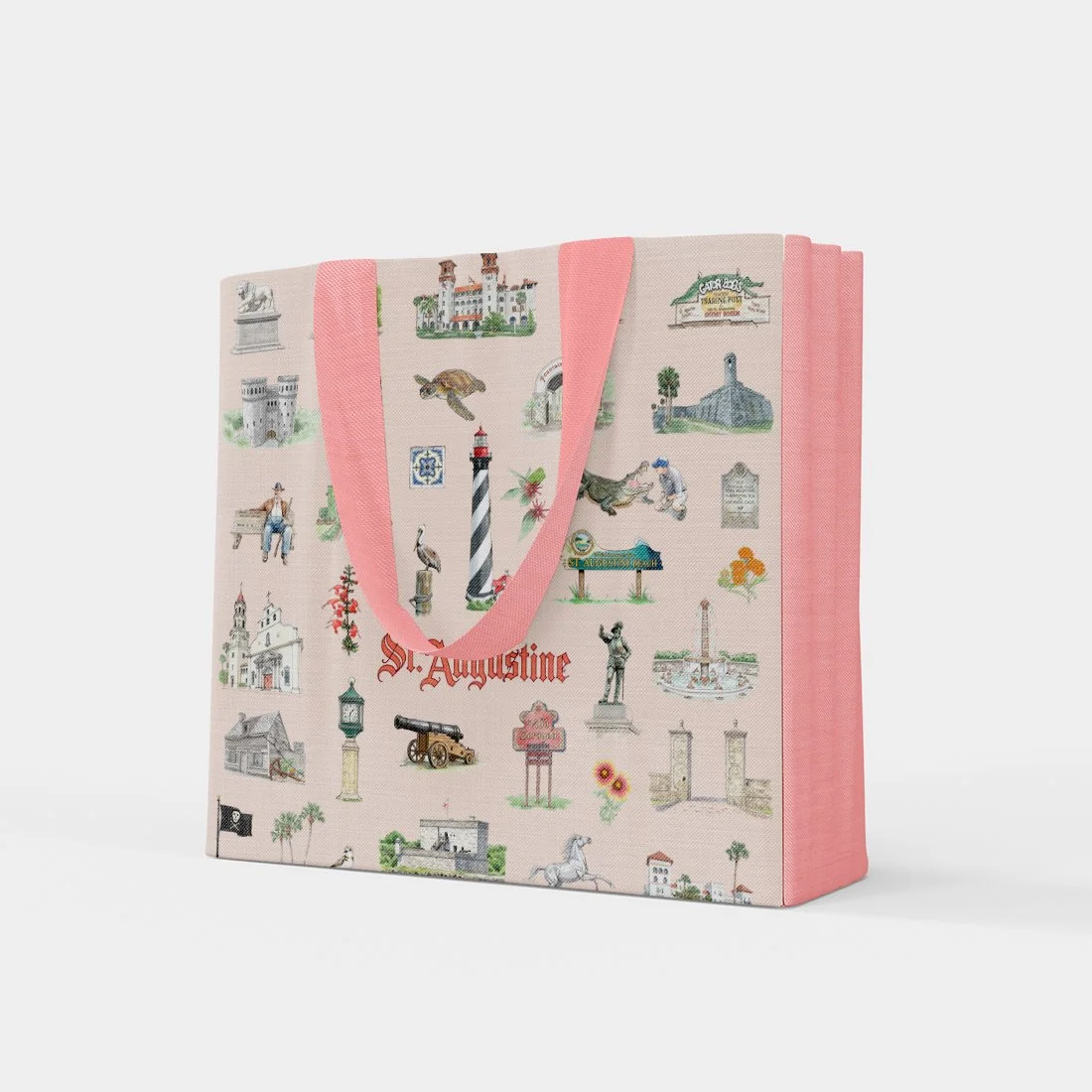
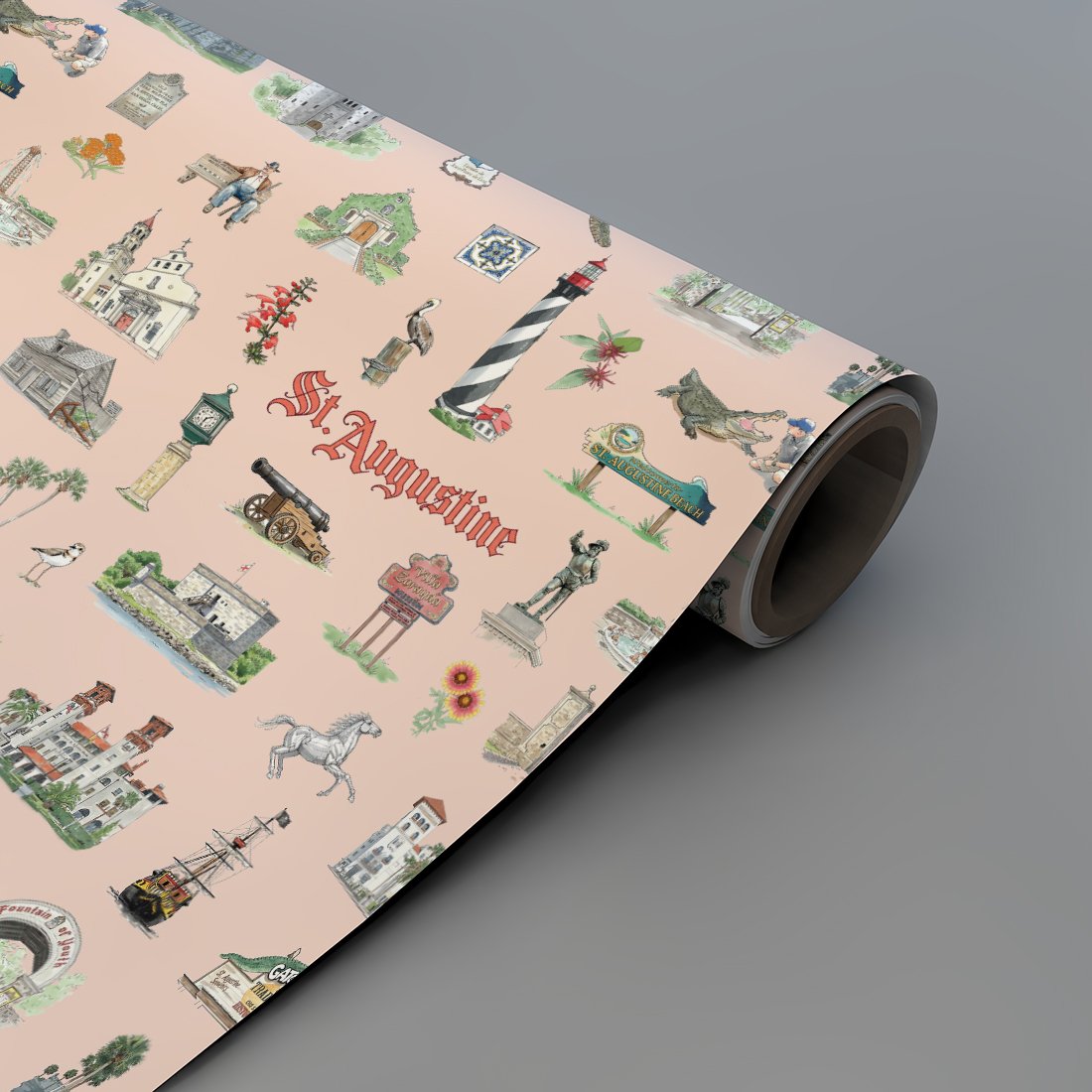
Coquina Coral (Original) — Soft peachy coral. The original colorway—captures Old Florida sunset warmth and coastal nostalgia. Perfect for products celebrating vintage Florida tourism and historic charm.
Fountain of Youth — Fresh mint aqua. Bright and optimistic. Great for cheerful coastal products, beach town retail, or anything targeting Florida vacation vibes.
Spanish Moss — Soft sage green. Earthy and grounded. Works for natural products, heritage-focused items, or understated coastal décor with historic character.
All three colorways use identical illustration systems with different background treatments, proving the pattern adapts while maintaining St. Augustine's layered personality.
Coordinate Patterns
Coordinate patterns are currently in development. Future additions will introduce textures, supporting repeats, and alternate layouts — expanding the system for layered product assortments and broader commercial application.
Applications
Currently available on:
Fabric, wallpaper, textiles
Stationery and printed goods
Tote bags, accessories
Home décor and lifestyle products
Mockups showing practical usage across categories
Designed for:
Historic tourism retail and gift shops
Hospitality merchandise for coastal destinations
Interior décor with architectural flair
Branded products celebrating St. Augustine’s heritage
Packaging and themed souvenirs
The illustration motifs scale seamlessly from small spot graphics to large-format surfaces. Individual elements extract cleanly for accent prints, seasonal zones, or architectural signage.
System Thinking
St. Augustine Landmarks is more than a collection of icons — it’s a modular illustration system designed to scale. Each element relates to the others through consistent form, proportion, and spacing logic, enabling flexible use across spot graphics and future repeat applications.
This structure supports coordinated product builds, alternate scales, and layered assortments without diluting thematic cohesion.
Part of a place-based pattern series celebrating destinations with distinct visual identities.
Why It Works
St. Augustine’s built environment and coastal culture have strong visual signatures. Unlike generic seaside motifs, this system organizes specific architectural details and found signage cues into a repeat-ready design language. It honors the city’s heritage while offering flexibility for varied product applications.
Portfolio & Licensing Note
This collection includes illustrative interpretations of historic landmarks and culturally significant elements from St. Augustine, Florida. As presented, it serves as a portfolio demonstration of place-based illustration and system development.
The visual language and structure can be adapted for original, public-domain, or custom-developed elements for future commercial applications.
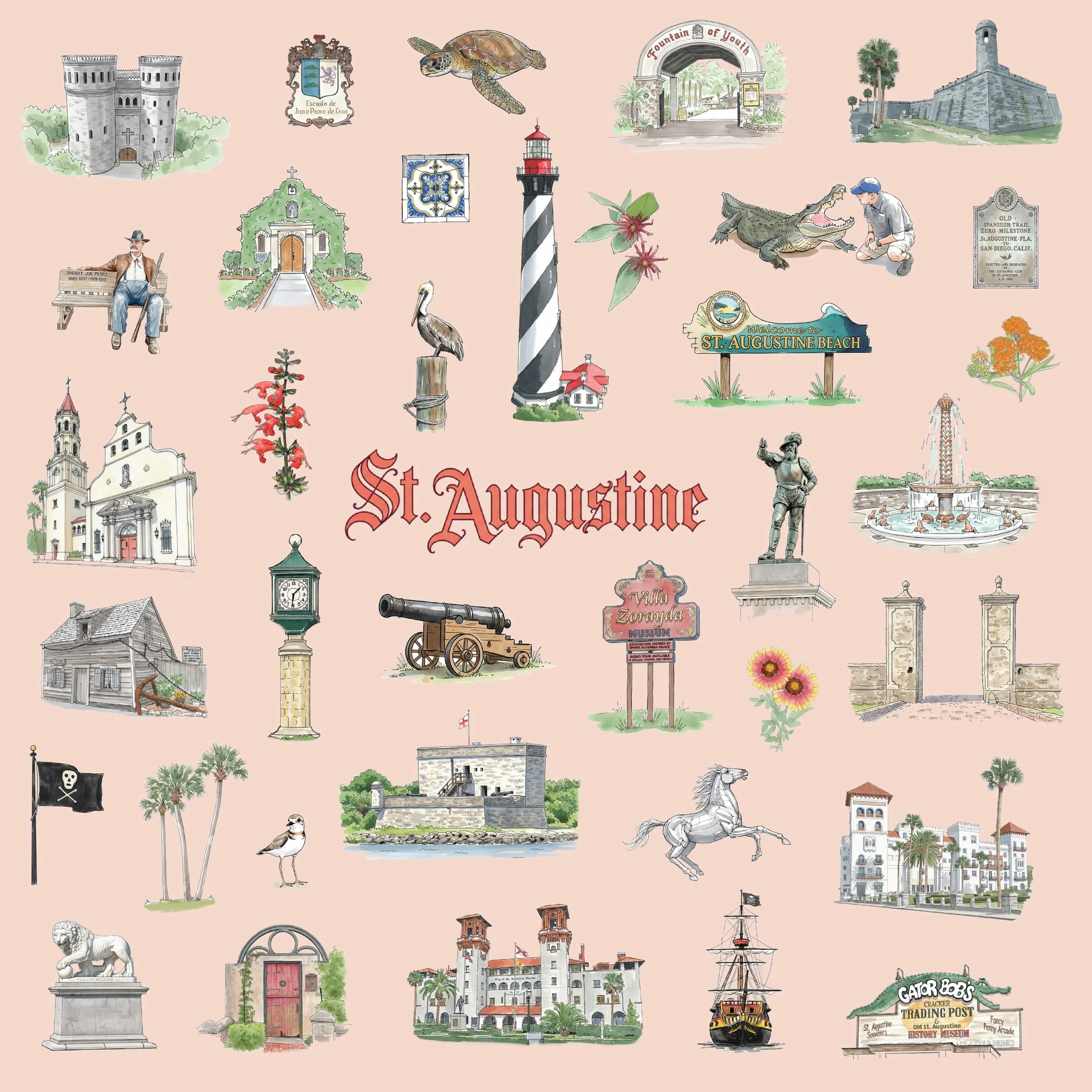
St. Augustine Landmarks — Coquina Coral (Original)
Additional Colorways
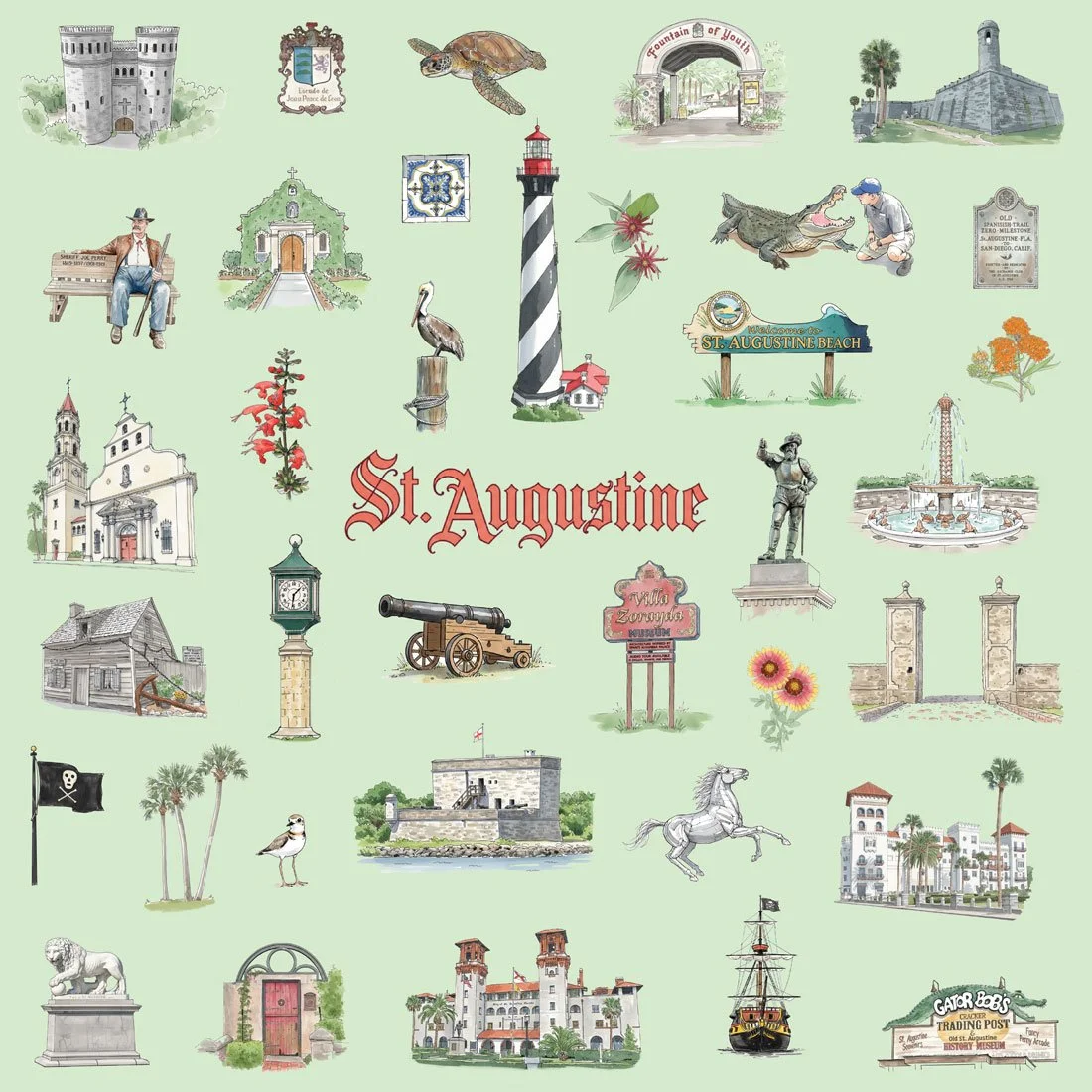
Spanish Moss
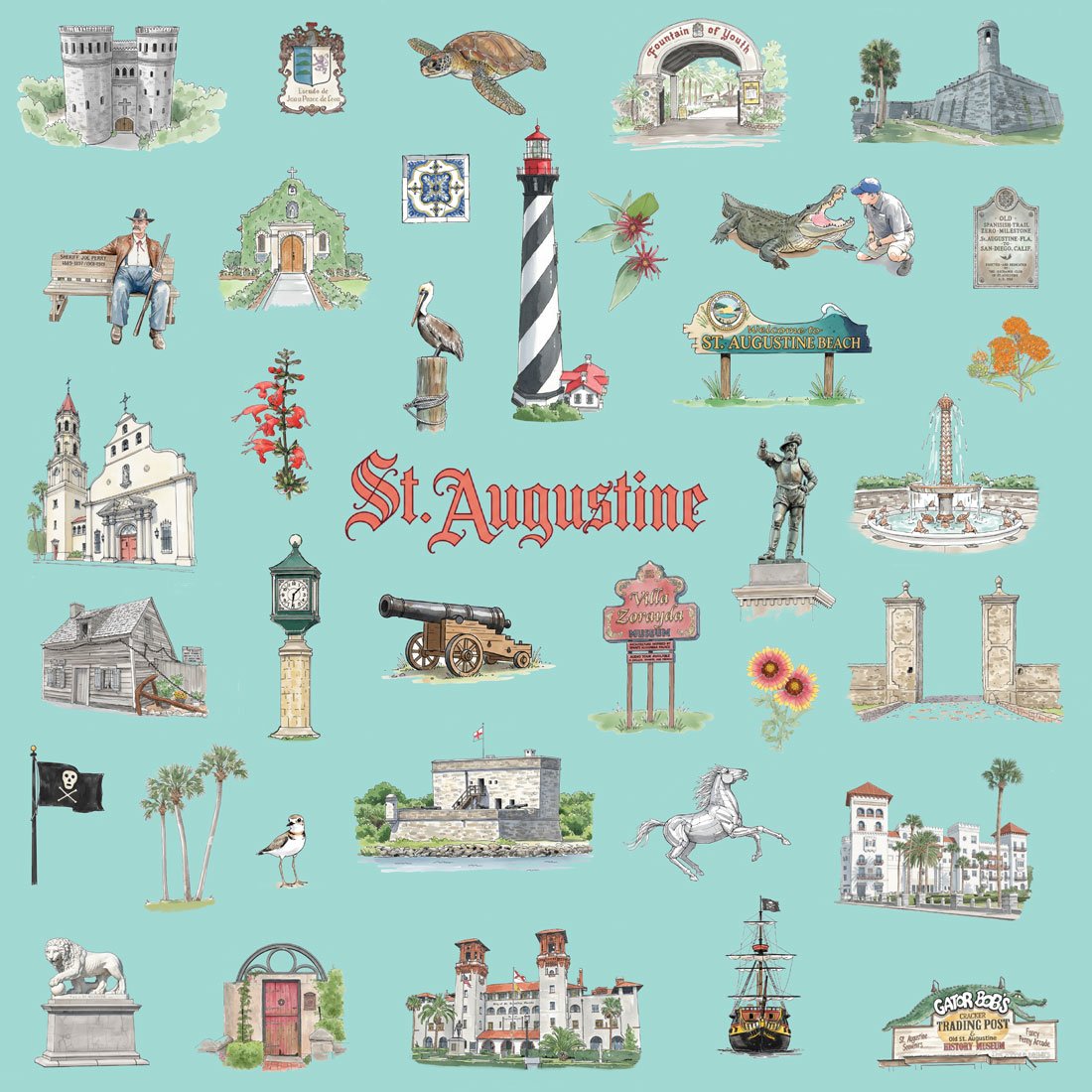
Fountain of Youth
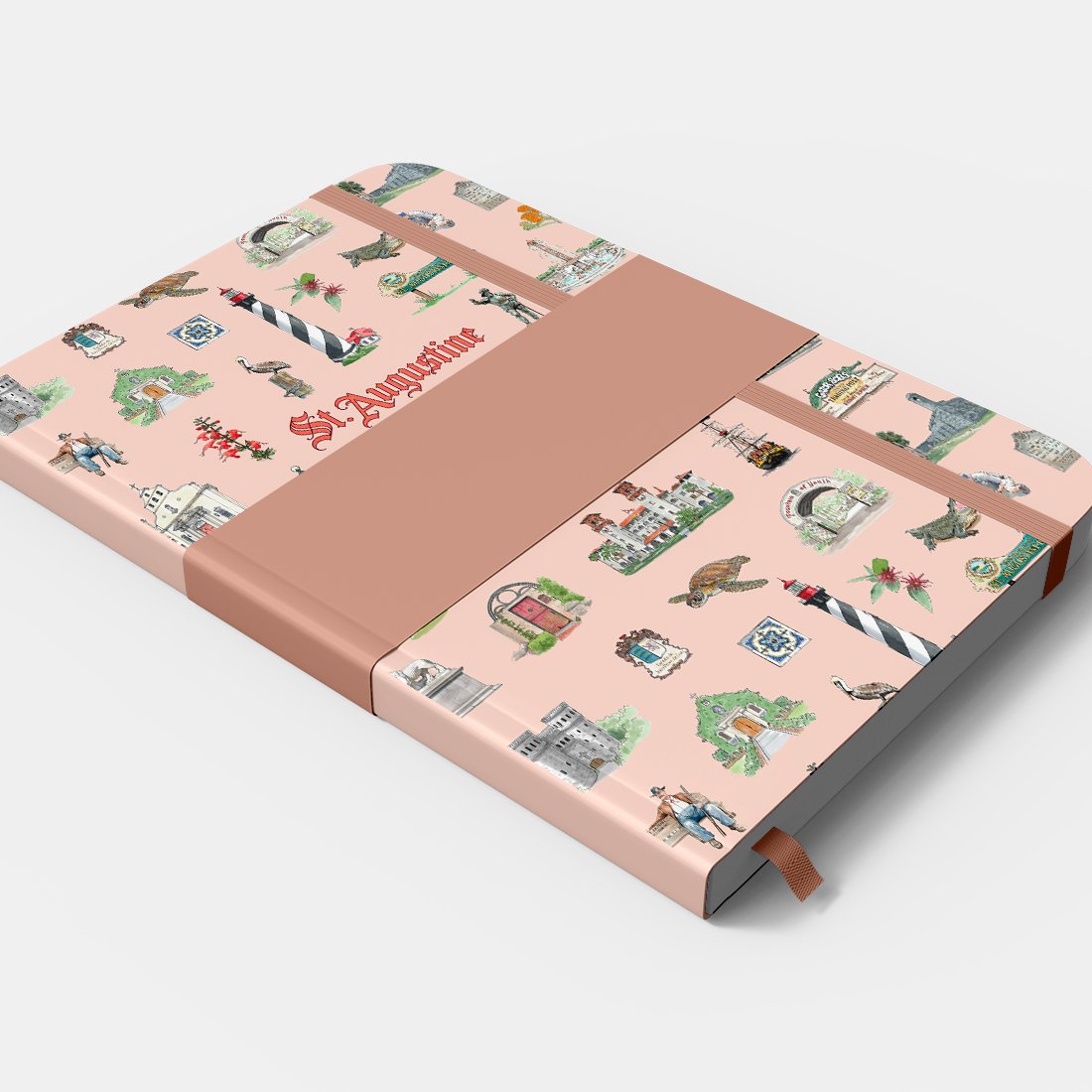
Available for Licensing and Custom Application
Inquire to explore usage terms for hospitality, retail, or product design.