
St. Augustine, Florida: America's Oldest City Has Opinions About Everything
St. Augustine has been around since 1565, which means it's had nearly 500 years to accumulate stuff.
Spanish colonial architecture. Pirate flags. A lighthouse with candy-cane stripes. Tourist signage that peaked somewhere around 1967 and never looked back. The oldest wooden schoolhouse in America sitting next to a vintage motel sign for Villa Zorayda.
You can't sum this place up in one illustration. It would be dishonest to try.
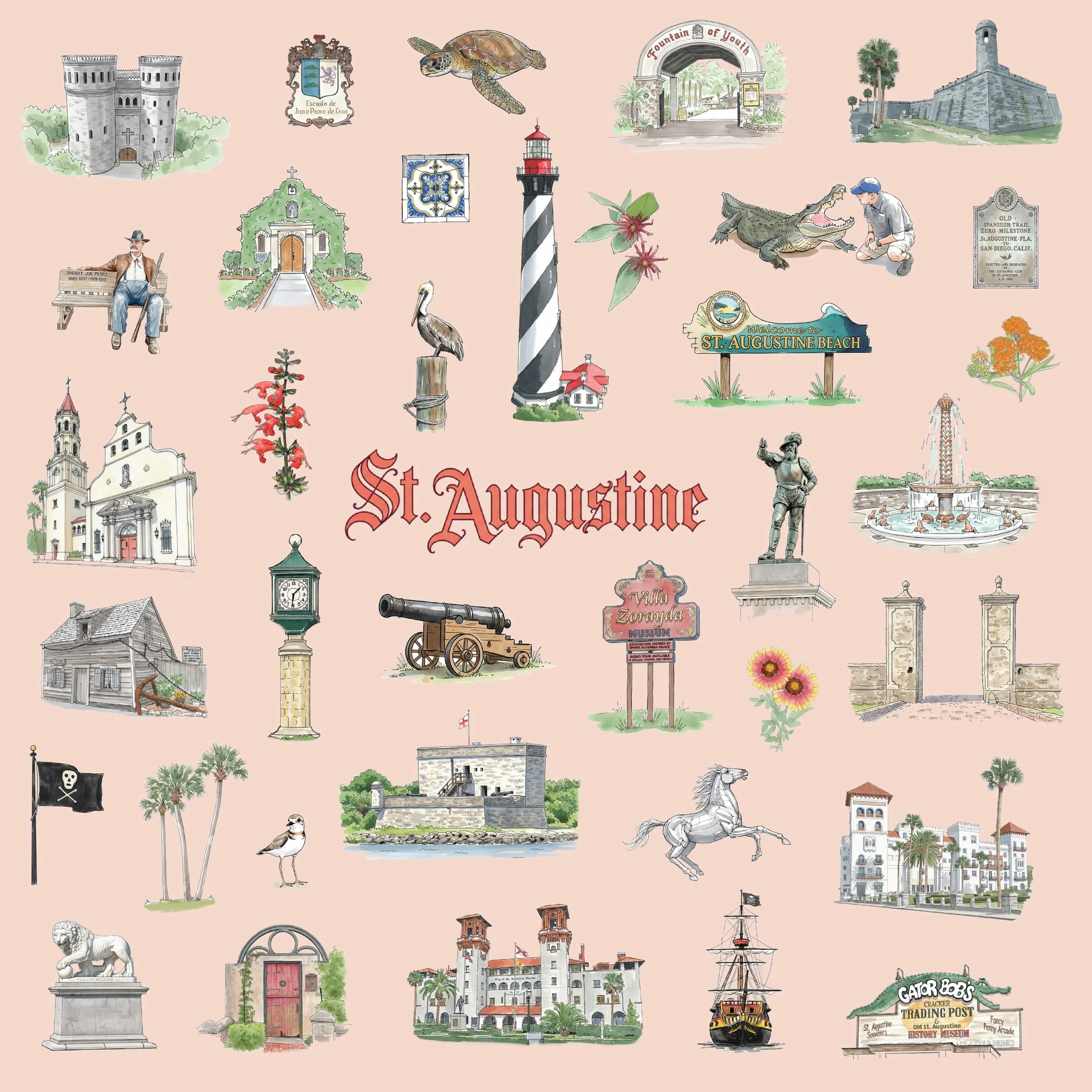
So I drew about 40 different things instead and made them into a pattern.


What Happens When History Refuses to Pick a Lane
Most historic towns commit to a vibe. Colonial Williamsburg is committed. Williamsburg, Virginia doesn't have a Ripley's Believe It or Not museum competing with the Governor's Palace.
St. Augustine said "why not both?" and then added:
The Castillo de San Marcos (an actual 17th-century Spanish fortress)
Ponce de León's Fountain of Youth gate (questionable historical accuracy, excellent branding)
The St. Augustine Lighthouse (functional AND photogenic)
A cannon (unclear which war, definitely decorative now)
Villa Zorayda's pink vintage sign (Moorish revival meets roadside Americana)
The oldest wooden schoolhouse (held together with spite and tourism)
Multiple Spanish mission churches
A pirate flag (because of course)
Pedro Menéndez de Avilés looking dignified on his pedestal
That one pelican that's always on the seawall
Sea turtles, palm trees, Minorcan clam chowder flowers (marigolds, but we're calling them that)
The Bridge of Lions (with actual lion statues)
Trading Post sign (vintage beach town excellence)
St. Augustine Beach sign (turquoise and optimistic)
A historical marker (one of approximately 600 in the city)
Casa Monica Hotel tower (because luxury hotels can also be castles, apparently)
Alligators doing alligator things
The result is a place where serious Spanish colonial history coexists peacefully with kitschy tourist attractions, and nobody seems bothered by the contradiction.
Why This Needed to Be a Pattern
A single illustration of St. Augustine would require choosing between "authentic historical landmark" and "vintage roadside attraction," and that's just not how St. Augustine works.
The city contains multitudes. It's been layered over centuries. Nothing here had to fight for relevance—it all just accumulated.
A repeating pattern lets all of it exist at once. The Castillo de San Marcos doesn't have to compete with the Villa Zorayda sign. The pirate flag and the mission church can be neighbors. The alligator and the pelican share space with the sea turtle.
What You Can Do With It
This is designed for places and brands that need coastal Florida history without generic beach vibes, or vintage Americana without the usual suspects.
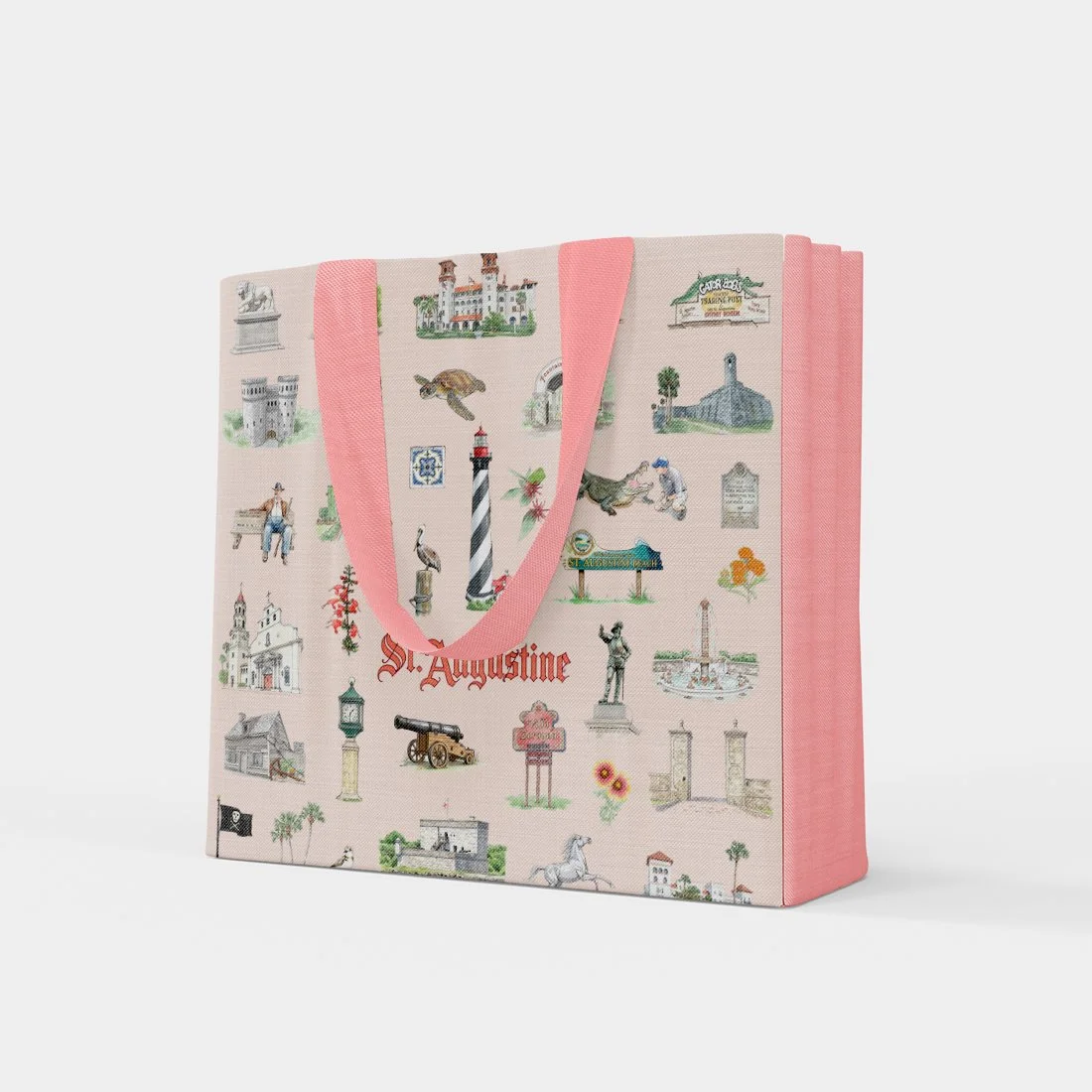
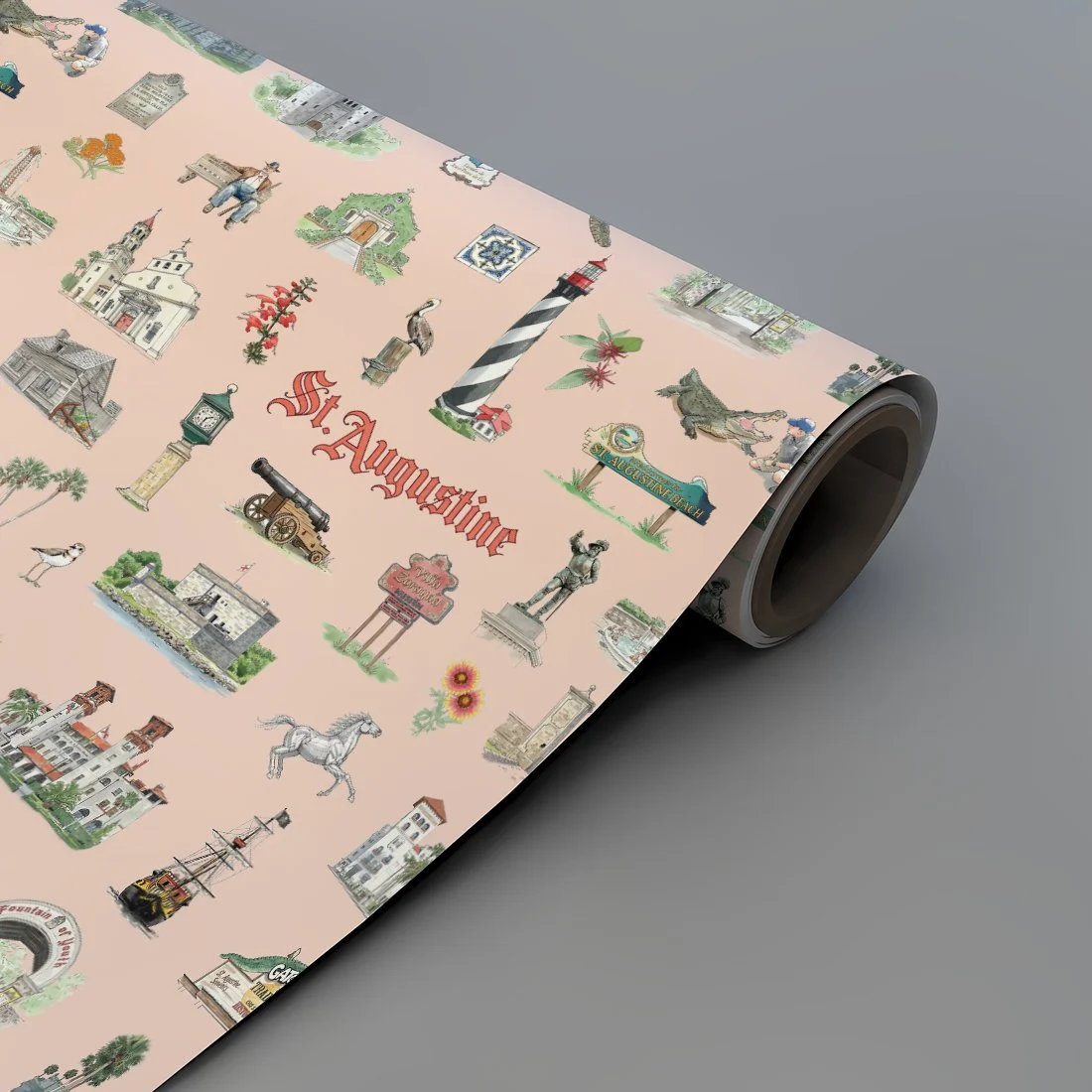
The full pattern works for wallpaper, textiles, packaging, large-scale graphics.
Individual elements work for editorial, branding, maps, signage, anything that needs a little "America's oldest city" energy without having to explain itself.
The whole thing is flexible enough to scale, tile, or pull apart depending on what you need.
Part of a Bigger Thing
I'm working through a series of coastal destinations—including Lowcountry spots like Beaufort, Charleston, Savannah, Bluffton, and Daufuskie, plus places like St. Simons Island. Each pattern captures a specific place with enough detail that locals recognize it immediately and everyone else wants to visit.
Still in production. More patterns coming soon.