
The Art of Vintage QSL Cards: Creating an Original Illustrated Series
I have a habit of wandering into obscure corners of design history. This month's rabbit hole? Vintage QSL cards.
If you've never heard of one, you're not alone.
Long before email, text messages, or social media, amateur (ham) radio operators connected with people around the world using shortwave radio. After making contact, many operators mailed each other a QSL card—a printed postcard confirming the conversation. It served as both proof of the radio contact and a personal calling card.
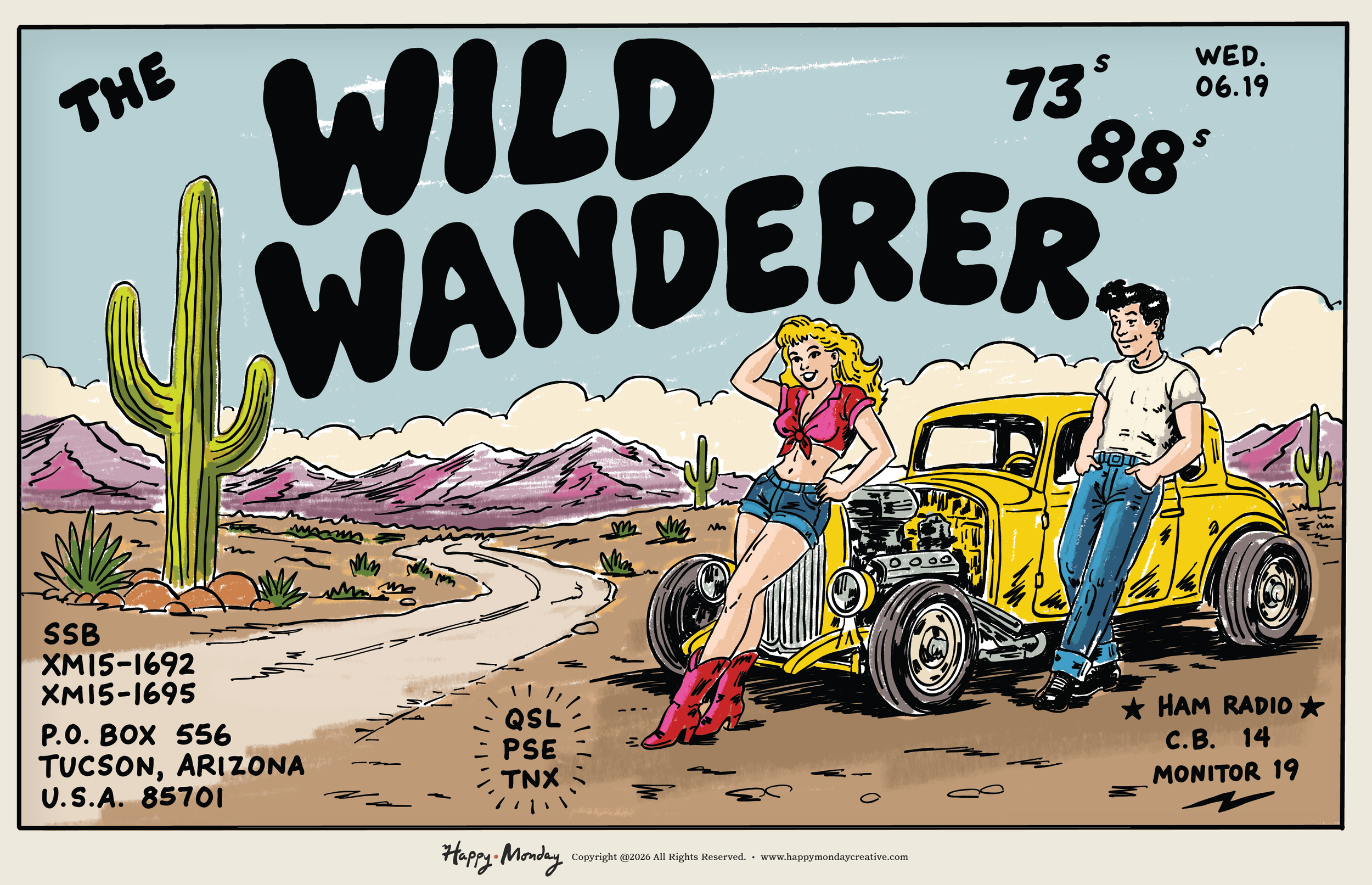
The Wild Wanderer
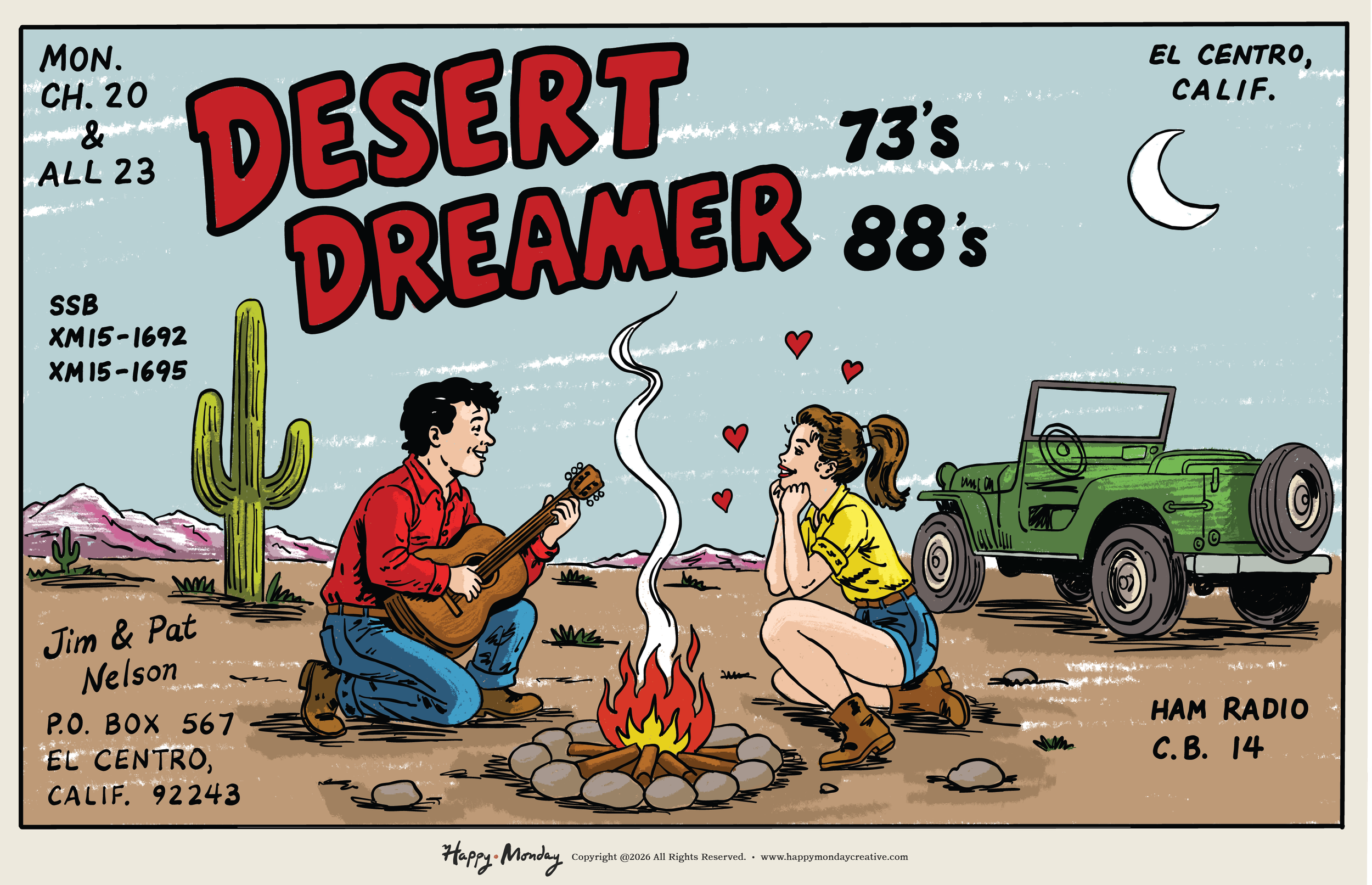
Desert Dreamer
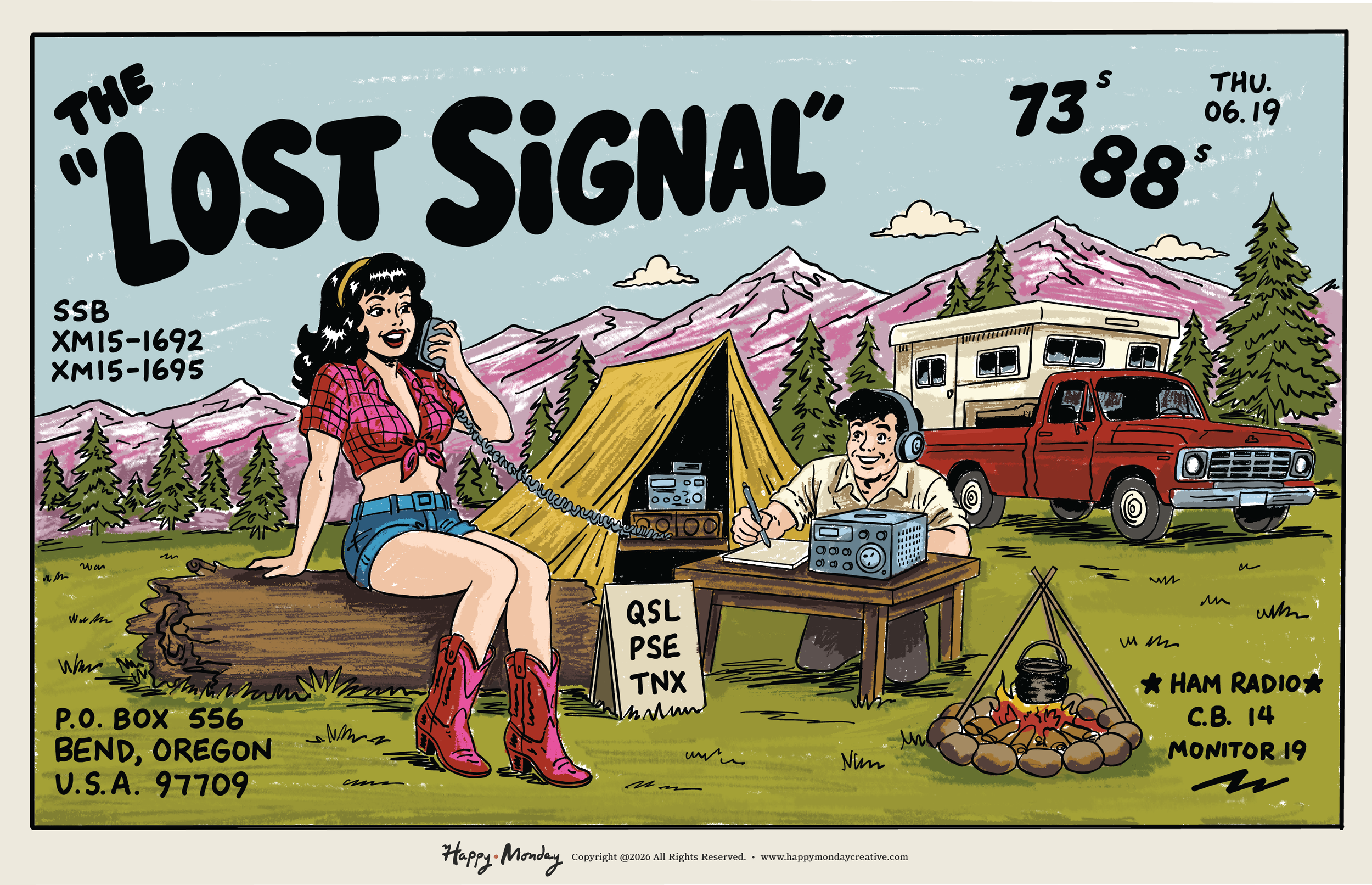
The Lost Signal
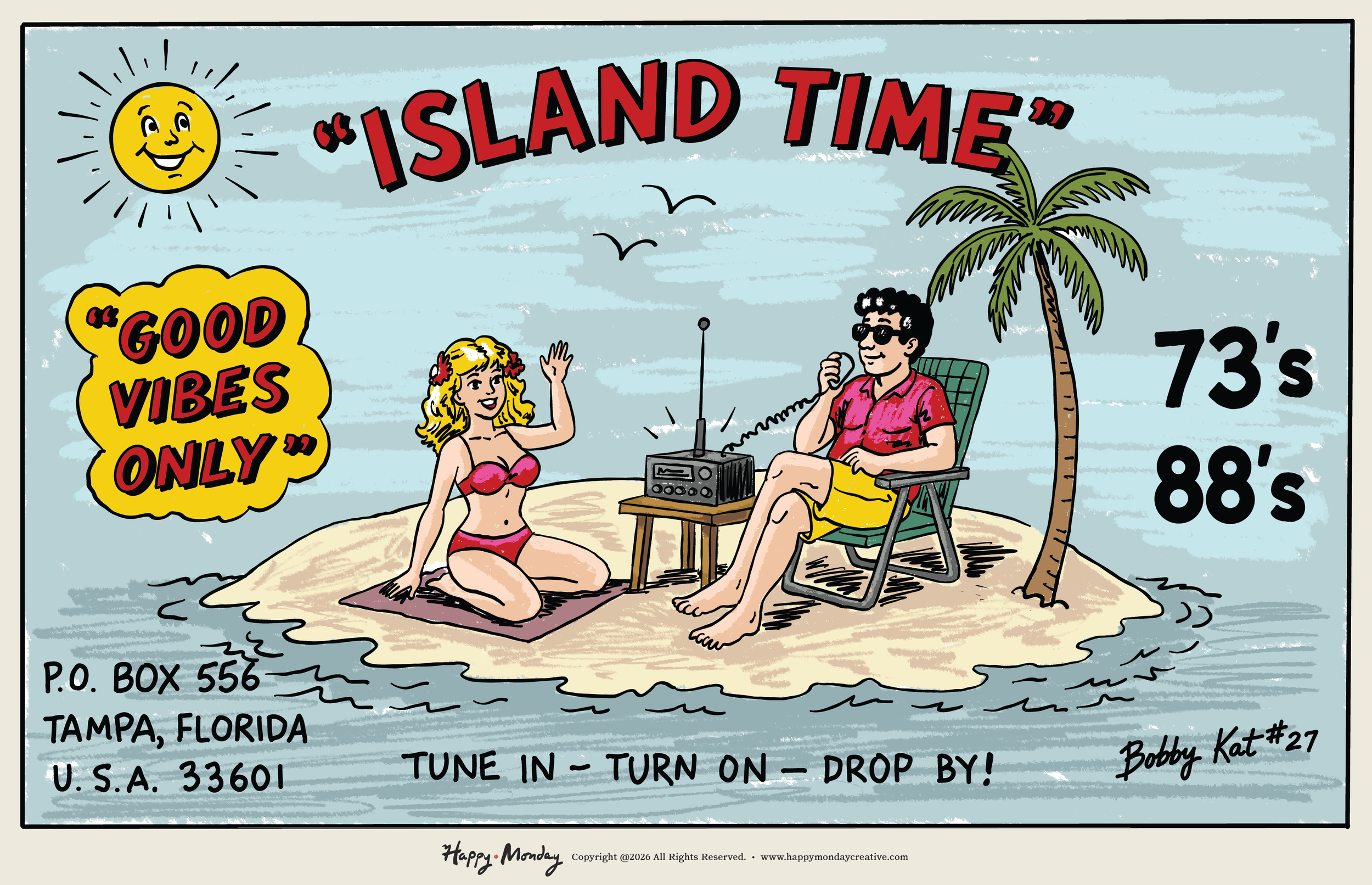
Island Time
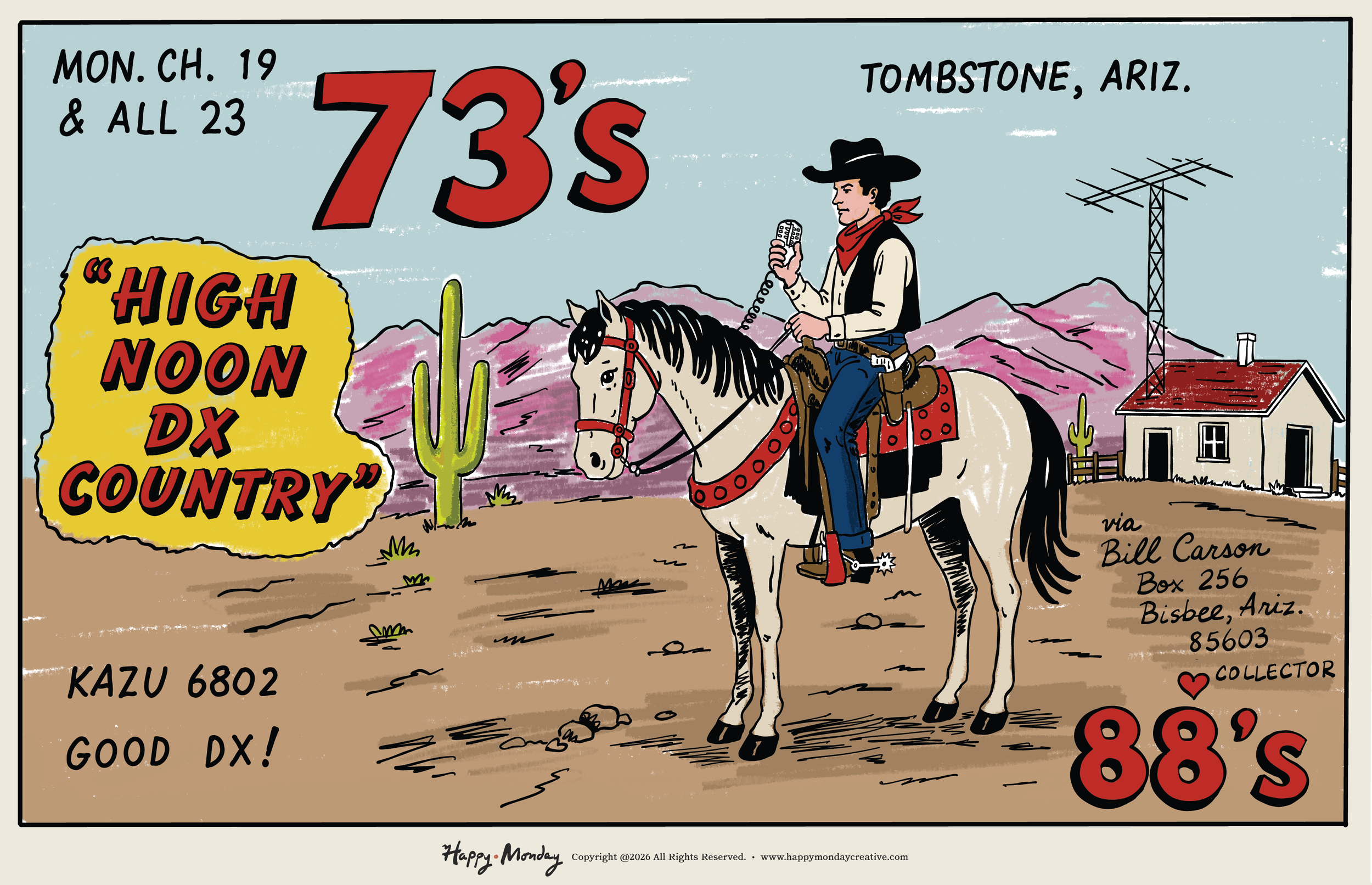
High Noon
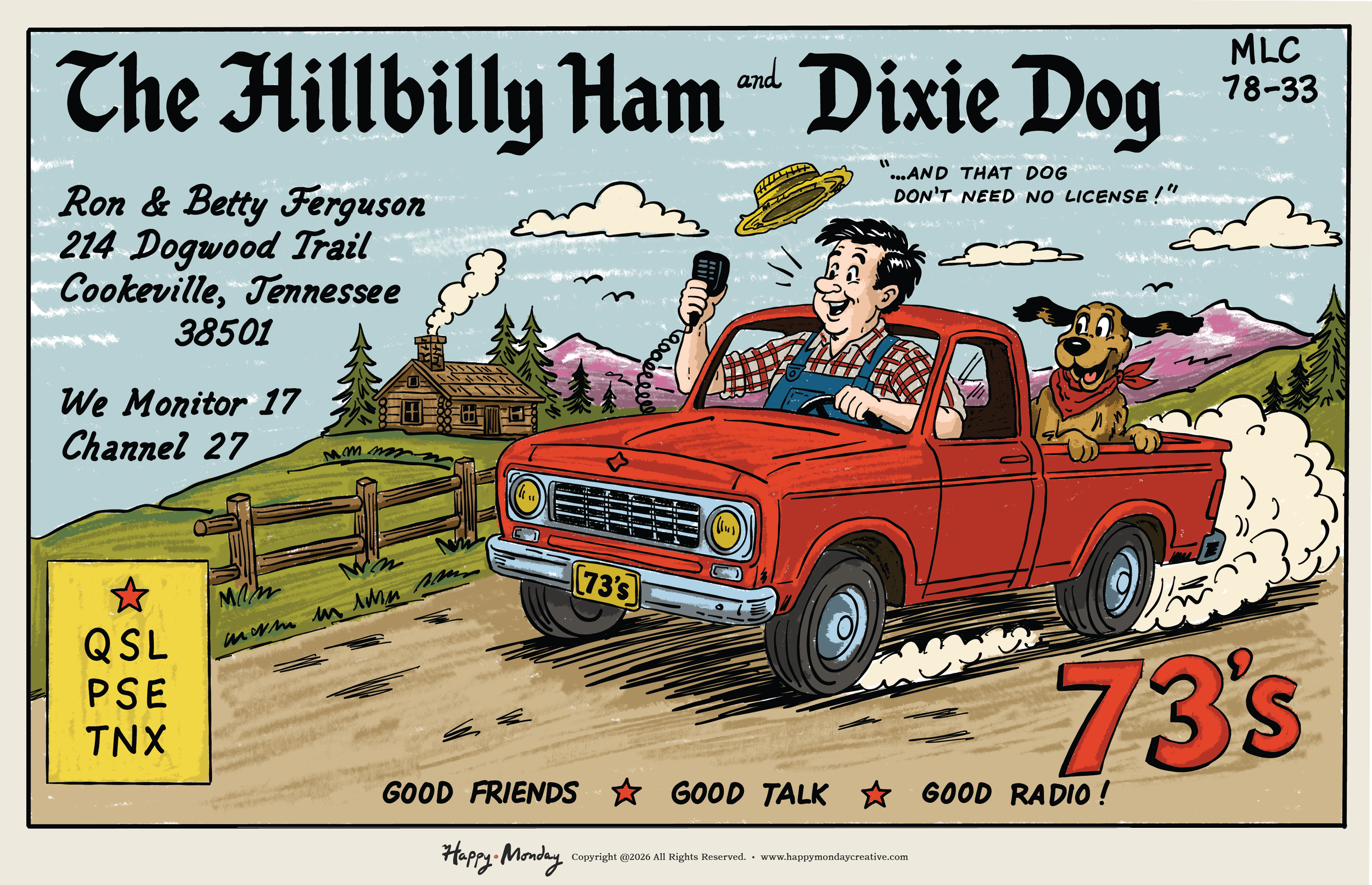
Hillbilly Ham & Dixie Dog
Over time, those practical little postcards evolved into something much more interesting.
Some were professionally printed. Others were drawn by hand or assembled from clip art, photographs, rubber stamps, or whatever was available. There were no real rules. A card might feature a favorite car, hometown landmark, hobby, pet, pin-up illustration, camping trip, airplane, western scene, or inside joke. Every one reflected the personality of the person behind the microphone.
That's what fascinated me.
They weren't designed to become collectibles. They were simply tiny pieces of graphic design made for one very specific purpose. Yet decades later, they capture a unique slice of American visual culture—part folk art, part commercial illustration, and part personal storytelling.
As an illustrator, I wasn't interested in reproducing old QSL cards. I was interested in imagining the ones that never existed.
What if there had been a hot rod enthusiast broadcasting from the Arizona desert? A couple operating a radio from a vintage campsite in Oregon? A cowboy checking in from Tombstone? These fictional characters became the starting point for an entirely new series.
Every illustration begins with the same challenge: create something that feels authentic to the era without copying any existing card. I borrow the oversized hand-lettering, limited color palettes, playful typography, weather reports, call signs, handwritten notes, and quirky layouts that made vintage QSL cards so distinctive, then invent entirely new people, places, and stories around them.
They're not replicas.
They're an exploration of a unique corner of mid-century commercial illustration—reimagined through original characters, places, and stories.
As the series grows, you'll see roadside diners, national parks, hot rods, camping trips, desert highways, western towns, forgotten attractions, and plenty of fictional radio operators who never actually existed—but probably should have.
Discovering vintage QSL cards reminded me that commercial illustration doesn't have to hang in a gallery to have lasting value. Sometimes the most memorable pieces are the ones created for everyday people with a story to tell. This series is my contribution to that tradition—creating brand-new illustrations inspired by a fascinating piece of design history.