Designing a More Patient-Centered Digital Experience for St. Francis Hospital & Health Centers
Experience Strategy · Discovery & Stakeholder Research · Competitive Analysis · Personas · Information Architecture · UX/UI Design · Prototyping · Usability Testing · Content Strategy
Overview
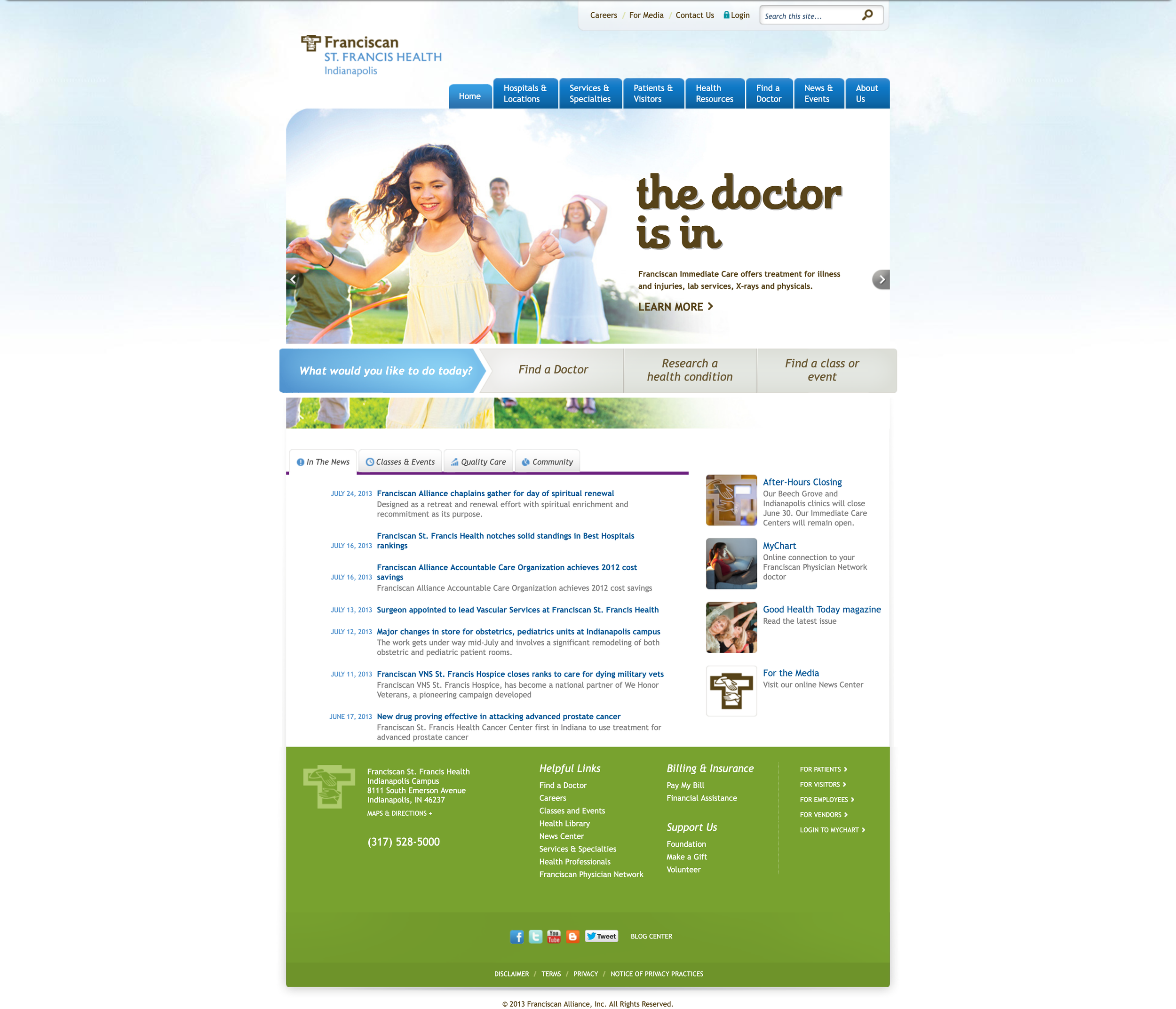
In 2008, I contributed to the redesign of the St. Francis Hospital & Health Centers digital experience (now Franciscan Health), helping move the organization from a department-driven website to a more audience-centered and task-oriented experience.
My role focused on the strategic foundation of the project — beginning with comparative website analysis and continuing through information architecture, audience planning, concept development, and experience validation.
The resulting structure supported the organization through multiple years of growth and remained in place through later brand transitions before evolving into Franciscan Alliance and eventually Franciscan Health.
My Role
I helped shape the experience strategy and UX foundation for the website redesign through research, planning, information architecture, and usability-driven design decisions.
My contributions included:
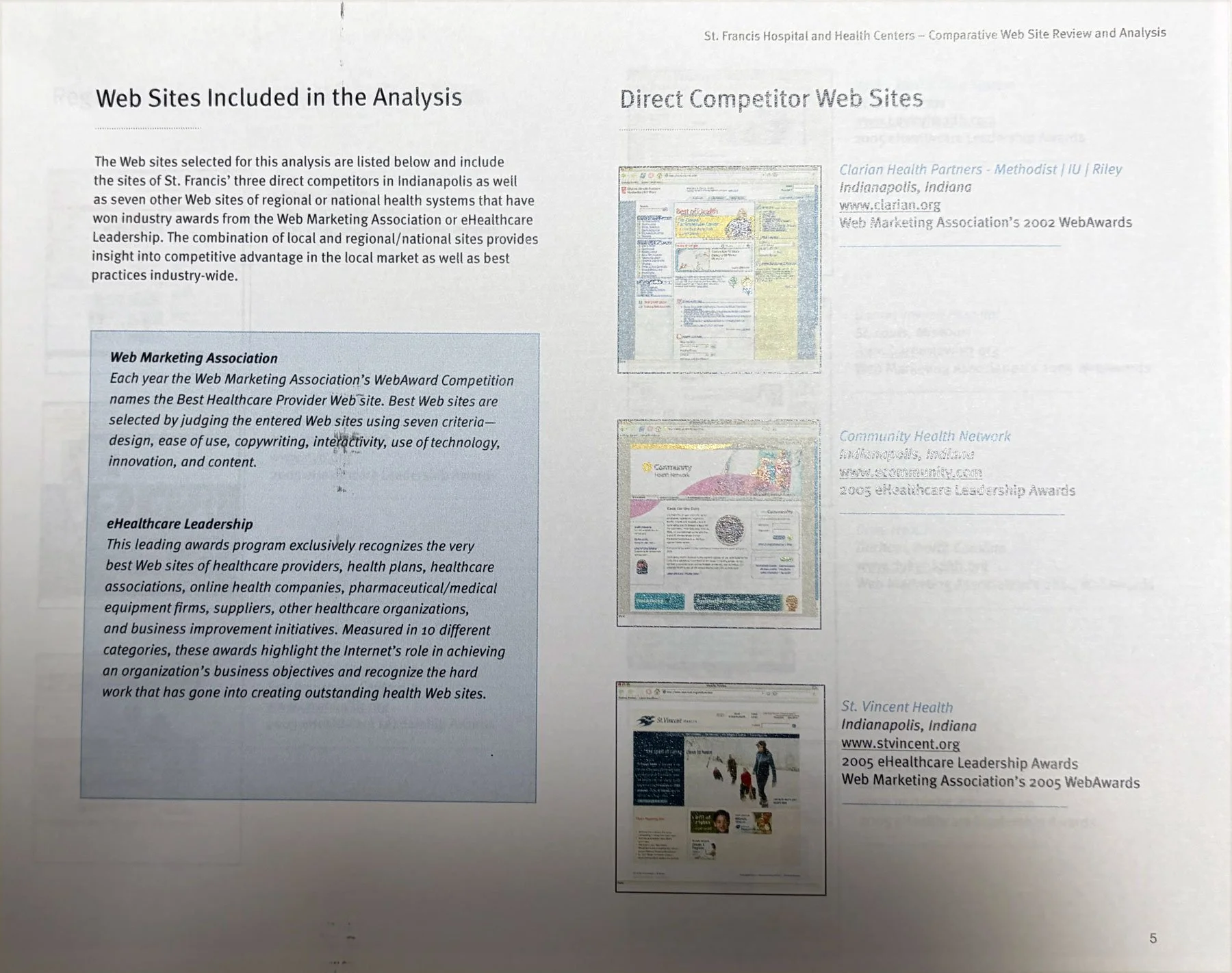
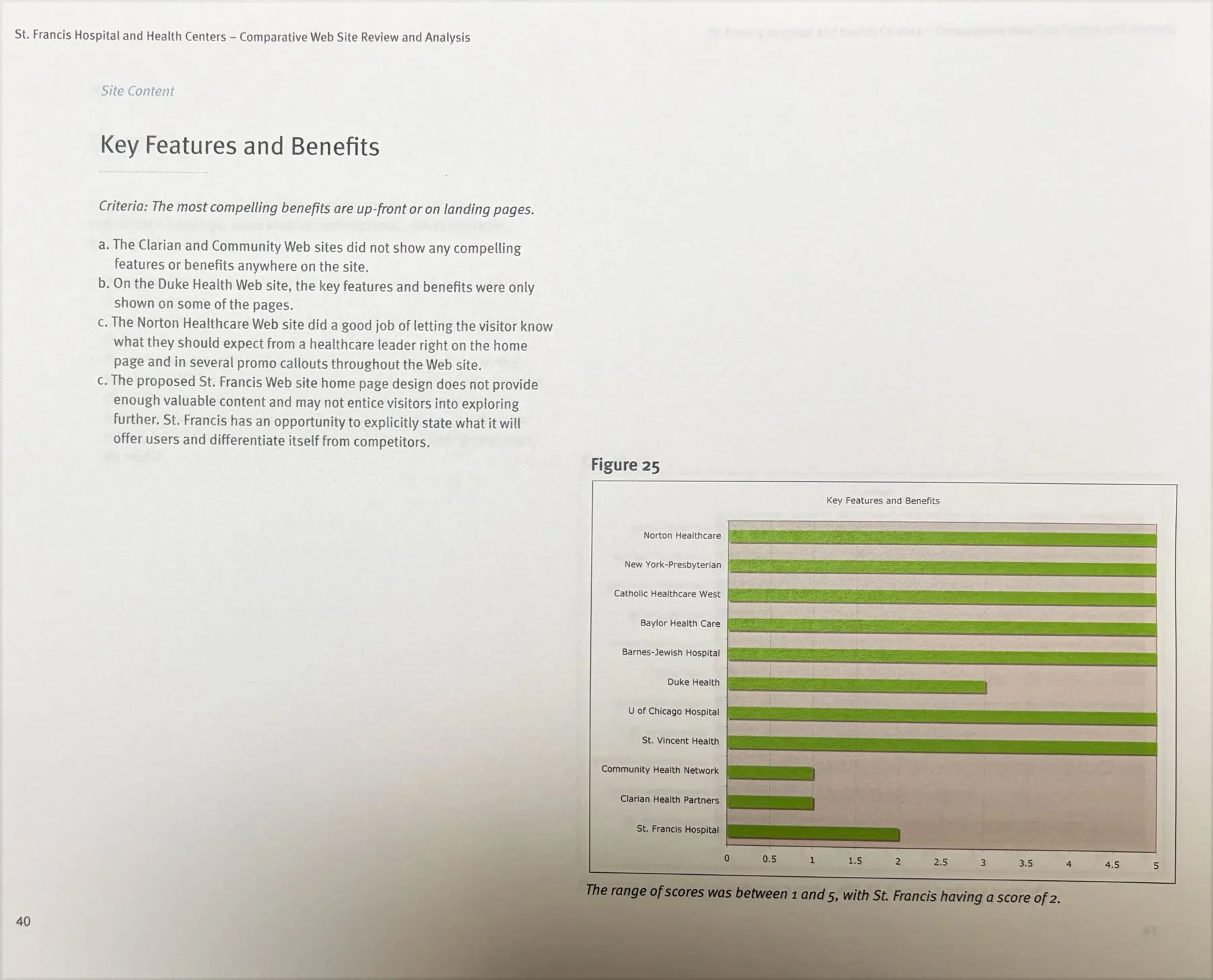
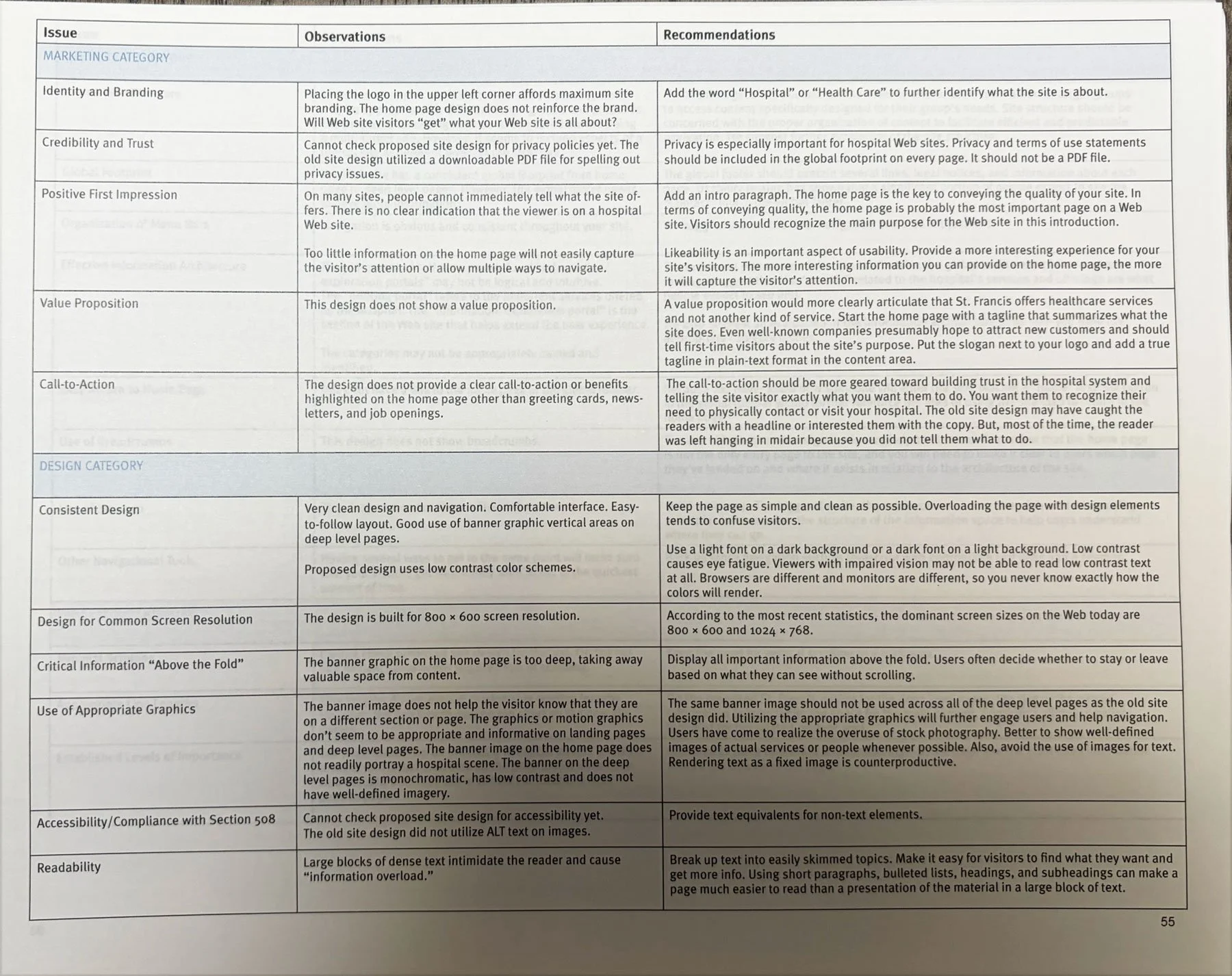
Conducting comparative website review and competitive analysis to identify opportunities, patterns, and audience expectations across healthcare experiences
Participating in discovery workshops with stakeholders to define business goals, audiences, priorities, and success measures
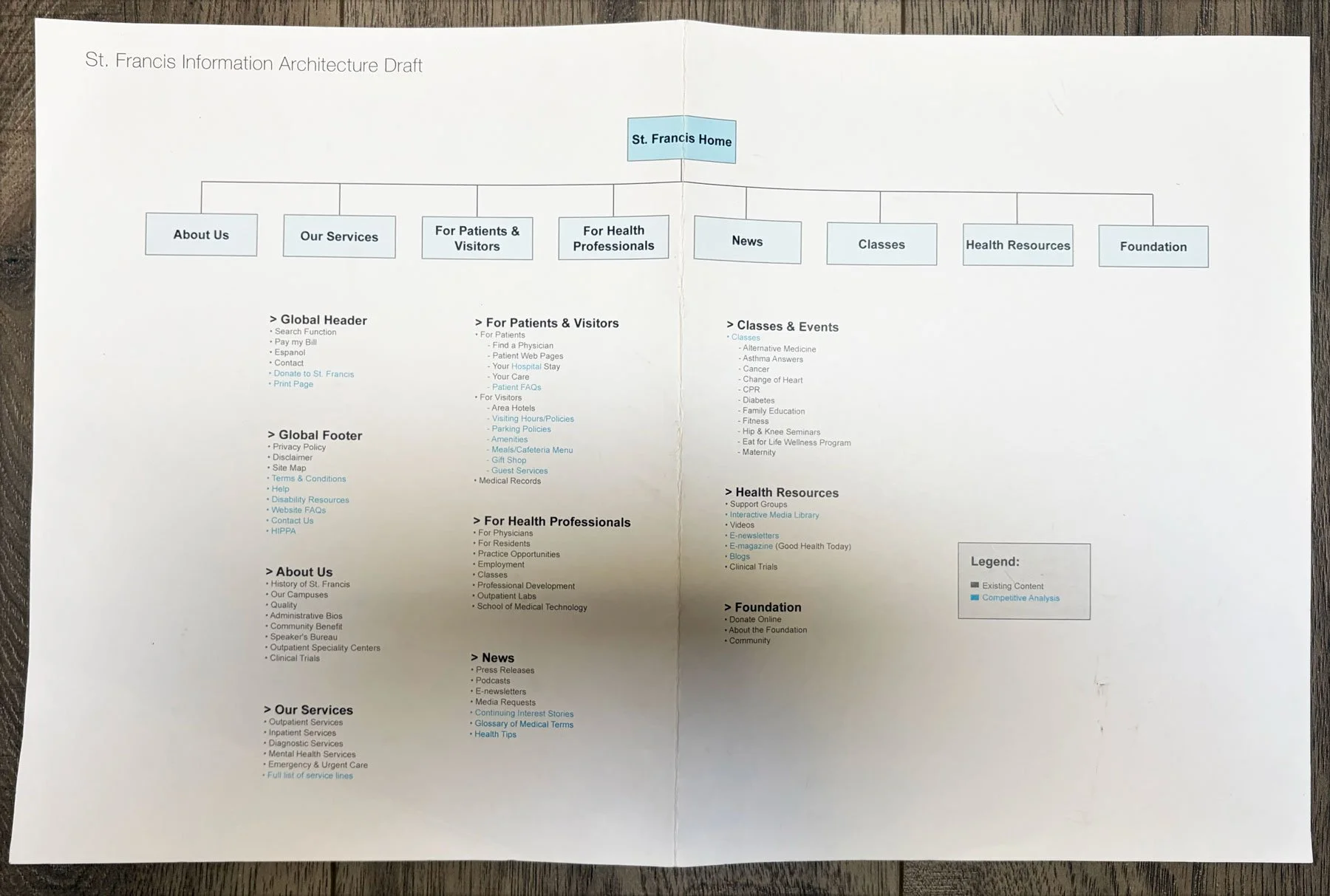
Developing information architecture and creating the website sitemap to support clearer navigation and content organization
Contributing to customer profiles and audience personas to guide experience decisions
Exploring audience-specific interface directions and navigation approaches
Supporting concept development through static concepts, interactive prototypes, and storyboarded interactions
Participating in usability testing sessions to evaluate navigation, terminology, visual communication, content structure, and user flow
The Challenge
The existing site reflected a traditional hospital structure — organized around departments, internal terminology, and competing priorities.
The redesign effort focused on creating a more intuitive digital experience that better aligned with how patients and visitors actually seek information:
finding a doctor
understanding services and conditions
locating hospitals and resources
completing common healthcare tasks
Process
Discovery
A series of stakeholder workshops established goals, audiences, business priorities, competitive context, and long-term vision.
Planning & Information Architecture
Research findings were translated into personas, sitemap recommendations, feature prioritization, production planning, and experience direction.
Concept Development & Design
Multiple audience-focused interface directions and navigation models were explored through static and interactive concepts.
Usability Validation
One-on-one moderated usability sessions were conducted using scripted scenarios. Participants evaluated navigation, terminology, content organization, visual treatment, and overall experience quality.
Outcome
The redesign transformed the experience from institution-centered navigation into a more patient-oriented digital model organized around tasks, audiences, and real-world healthcare journeys.
The underlying structure remained durable across years of growth and brand evolution before later transitions into Franciscan Alliance and today’s Franciscan Health.
Integrated Campaign Extension: St. Francis Heart Center
During the same engagement period, I also designed the digital experience for the St. Francis Heart Center microsite as part of a broader integrated marketing initiative.
The Heart Center offered advanced cardiac care supported by state-of-the-art technology and expanded access across three hospitals and multiple outpatient facilities. The microsite was developed to promote the unique and revolutionary services offered by the St. Francis Heart Center and create a focused destination where users could better understand available services and care pathways.
The site worked in conjunction with a fully integrated marketing campaign that included :60 TV spots, print ads, radio, outdoor, direct mail, and online banner advertising.
Serving as the central digital destination within the campaign ecosystem, the microsite translated awareness and campaign messaging into a richer digital experience designed to educate users, support engagement, and connect patients with care.
This work extended beyond website execution and reinforced how digital experiences fit within broader brand and campaign ecosystems — connecting integrated awareness efforts with meaningful patient interaction.