The Idea
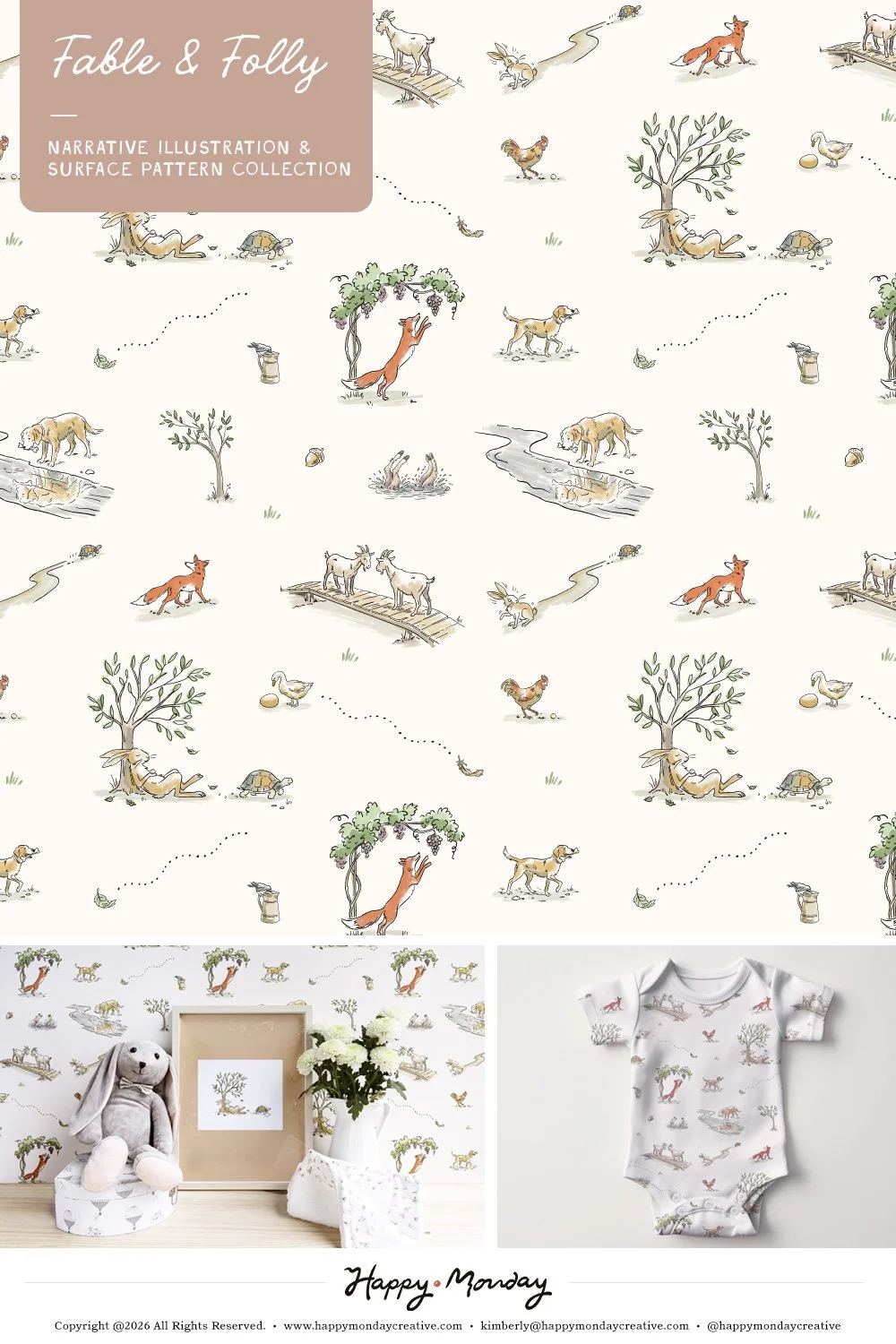
Fable & Folly began as an exploration of classic fables but quickly evolved into something broader: a collection about human nature.
The animals may be familiar, but the collection isn't really about animals.
It's about the behaviors hidden inside the stories.
The Stories Behind the Collection
For generations, fables have helped children make sense of the world through simple stories and memorable characters.
Each illustration in Fable & Folly explores a familiar childhood lesson:
Fox & Grapes → Reaching for Big Goals
Hare & Tortoise → Patience and Persistence
Dog & Reflection → Appreciating What We Have
Two Goats → Finding a Way Forward Together
These timeless stories continue to resonate because they introduce important ideas in ways children can understand.
Themes throughout the collection include:
Curiosity
Determination
Patience
Resilience
Problem Solving
Perspective
Cooperation
Growth
Why Fables?
Long before children's books filled library shelves, fables were one of the first ways stories were used to teach values, spark conversation, and encourage imagination.
Their lessons remain relevant because they help children explore challenges they will encounter throughout life.
By pairing these stories with illustrations and playful pattern design, Fable & Folly creates a collection that feels both nostalgic and meaningful for children and the adults who share these stories with them.
Building the Illustration System
Instead of creating a single repeat pattern, the collection was developed as a narrative illustration system.
The artwork includes:
Hero illustrations
Secondary story moments
Narrative fragments
Supporting filler motifs
Coordinating surface patterns
Small details such as paths, feathers, leaves, acorns, and transitional story moments help connect the larger scenes and create visual rhythm throughout the collection.
The Visual Style
The illustrations combine:
Hand-drawn ink linework
Restrained watercolor washes
Simplified forms
Generous negative space
Storybook-inspired composition
The goal was not to recreate historical fables, but to create imagery that feels timeless, approachable, and quietly expressive.
Applications
Fable & Folly was developed with a range of licensing and product applications in mind, including:
Fabric
Wallpaper
Children's décor
Stationery
Giftware
Home goods
Editorial illustration
Licensing collections